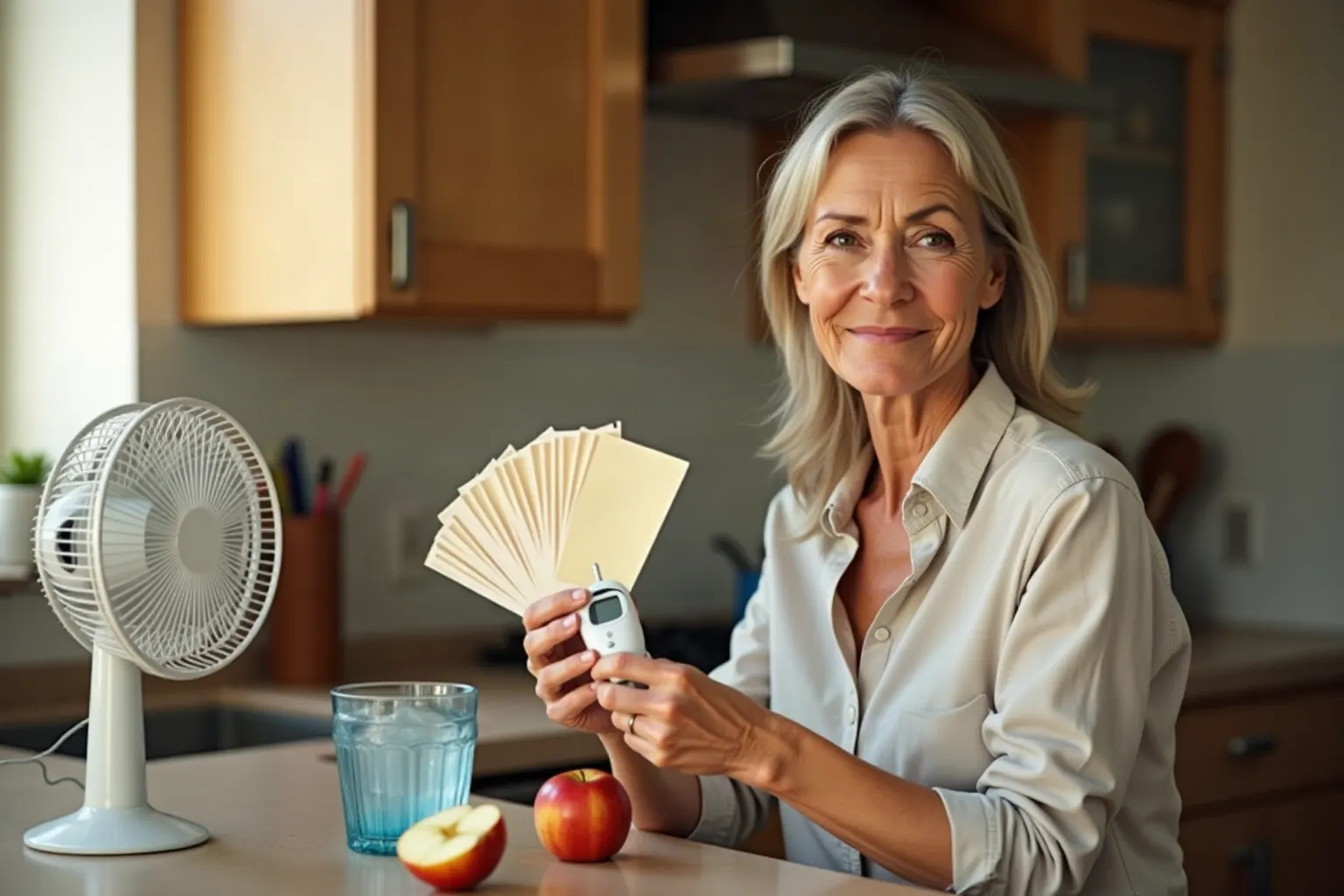
There's a line from the group chats that this entire guide is built around:
"My doctor treats my A1C and my hot flashes as two different patients."
If you have type 2 diabetes and you're in perimenopause, you probably just felt that in your ribs. Two conditions. Two specialists. One of you. And a research finding from August 2026 that says the combination is heavier than either one alone: postmenopausal women with type 2 diabetes report a greater menopause symptom burden than women without it – worse vasomotor and non-vasomotor symptoms Established: Contemporary OB/GYN.
So let's do the thing the medical system is bad at: map the overlap, name the gap, and hand you the script for making two doctors act like they share a patient.
First, the overlap map: which symptom belongs to which doctor?
Here's the problem with the double-whammy: the symptoms don't come labeled. Fatigue, broken sleep, brain fog, mood swings – these are the greatest hits of both perimenopause and unstable glucose.
Perimenopause brings sleep problems, mood changes, and poor memory and brain fog as core symptoms Established: NHS. Type 2 diabetes means your body isn't using insulin the way it should, so glucose builds up in the blood – and over time, that affects almost every system, including energy and mental clarity Established: ADA.
So on any given Tuesday, your 3 p.m. fog could be:
- estrogen doing its thing,
- a blood sugar pattern doing its thing,
- or – the most likely answer – both, in a stack.
The rule: you don't get to guess which one. You get to measure. That's not a medical claim, it's logistics. And logistics is exactly where this whole thing falls apart.
Why the A1C doctor and the hormone doctor don't talk
It's not malice. It's that nobody assigned the overlap.
- Your endocrinologist or PCP owns the A1C. They are excellent at glucose and possibly allergic to the word "estrogen."
- Your gynecologist owns the hormones. They are excellent at peri and may not ask about your diabetes medication at all.
- The research coverage is blunt about the result: women describe managing the intersection alone Established: Contemporary OB/GYN.
You are the only person in the room with the full dataset. Which is exhausting – but it also means you hold the coordination power. Here's the script.
The coordination script (print this)
Three moves. Do them in order.
1. Get it in writing. At your next appointment with either doctor, say: "I'd like you to send a note to my [other doctor] about how we're handling [symptom]. Who should I tell them to expect it from?" The written referral/note request is the single most effective coordination tool that costs you nothing. Doctors respond to paper trails.
2. Bring one shared log. Not a symptom journal for the gynecologist and a glucose log for the endocrinologist. One page, three columns: date, symptoms, glucose readings + sleep notes. When both doctors see the same data, they stop guessing – and you stop being the unreliable narrator of your own body.
3. Ask the lane question. In every appointment, ask directly: "Is this symptom in your lane or theirs?" If the answer is "theirs," ask for the referral in writing before you leave the room. The goal is a named owner for each symptom – because an unowned symptom is a symptom that doesn't get treated.
Blood sugar × hot flashes: what we actually know
Now the interaction everyone wants a clean answer for, and the honest version of it.
Hot flashes are sudden vasomotor events – your body's thermostat temporarily losing the plot as estrogen fluctuates Established: OWH. They're the most common menopause symptom, and they don't care about your diabetes care plan.
What we do know about the interaction, from well-established sources:
- Night sweats fragment sleep. Repeated wake-ups with soaking nightclothes are a core perimenopause complaint Established: NHS.
- Sleep disruption, stress, and dehydration all influence blood sugar. The American Diabetes Association's whole-body framing applies here: diabetes affects your brain, heart, nerves, and energy systems Established: ADA.
- The individual pattern is yours alone. Whether your hot flashes move your glucose is a pattern question – which is exactly why the log matters.
What we don't do: give you a universal "hot flashes raise blood sugar" rule, because anyone who claims one is over-simplifying a system with too many variables.
Medication and timing: the signpost section
Here's where we earn the medical disclaimer. We are not your clinician, and the interaction between diabetes medication timing and perimenopause symptom management is exactly the kind of thing that needs one.
What we can say, clearly:
- Never adjust diabetes medication based on a hot flash, a bad night, or a group-chat theory. Medication changes are your clinician's call Established: MedlinePlus.
- If you're on medication that can cause lows, you should have a written hypoglycemia plan – what to keep on hand and what to do. If you don't have one, that's the question for your next appointment, not a Google search.
- Night sweats that wake you repeatedly are a legitimate topic for your clinician – not a personal failing, and not something to "push through." Ask: "How should we think about overnight lows given that I'm waking up sweating?"
And the red flag that outranks all of it: postmenopausal bleeding of any kind means a prompt GP call, full stop Established: NHS. Diabetes or not, that one is non-negotiable.
What helps now (the safe, doable list)
The good news: the comfort lane is mostly safe and mostly effective, and none of it requires a prescription.
- Layers you can shed. The removable-cardigan method is federally endorsed in spirit – keeping the bedroom cool and using a fan are standard hot-flash relief tactics Established: OWH.
- The nightstand kit. Water within reach (night sweats are dehydrating), a cooling towel, your fan, and – per your clinician's plan, not our guess – whatever you keep for lows.
- Cooling that doesn't complicate your glucose. Fans, cooling sheets, and cooling pajamas are the safe lane: they cool the body without touching your blood sugar. We built the glucose-friendly cooling guide for exactly this – what to put on the bed and the nightstand when the 3 a.m. soak is a two-condition problem.
The bottom line
The double-whammy is real, it's heavier than either condition alone, and the system isn't built for it. But here's the thing about being the connective tissue: you're the one who can make the two halves of your care talk. One note request. One shared log. One lane question per appointment. That's the whole script.
You didn't ask for two conditions at once. You also don't have to manage them like two different patients.
This article is educational, not medical advice. Discuss any symptom changes, medication timing, or treatment options with your own clinicians.