The headline is doing a lot of work, so let's be precise: the FDA didn't quietly update a guideline. It removed the strongest warning label it has – the black-box warning – from most hormone therapy products, and the sitting FDA commissioner called the era that warning created "an American tragedy."
If you were an adult in the 2000s, you didn't just hear that HRT was risky. You heard it was dangerous – the kind of dangerous that gets a black-box warning, the kind that made doctors write "no" on the chart and made women stop asking. The message traveled so well that it outlived the evidence behind it.
In November 2025, the FDA began removing those warnings, calling the Women's Health Initiative-era warnings "overly broad" and based on outdated information Established: CBS News. By August 2026, the news is moving through local broadcasts and medical conferences: more women are asking, and more clinicians are learning Established: CBS News.
And in the group chats and the comment sections, something else is happening that the headlines don't cover. It's not relief. It's a reckoning.
What the black-box warning actually said
The black-box warning is the FDA's strongest label – reserved for drugs whose risks are serious enough that they can cause death or serious harm. For two decades, estrogen-containing hormone therapy products carried one warning about cardiovascular disease, breast cancer, and dementia, added after the 2002 Women's Health Initiative reported increased risks in its combined estrogen-plus-progestin arm Established: CBS News.
The practical effect was a collapse in use: from roughly 27% of postmenopausal women in 1999 to under 5% by 2020 Established: Epic Research. A generation of women was told their treatment was dangerous – and a generation of doctors learned to say no before the question was even finished.
Why the FDA removed it
The removal (November 2025) came after years of reanalysis. The critical detail, the one that took twenty years to explain: the average WHI participant was in her 60s – a decade or more past menopause onset. The findings were real for that population. Reanalyses found that relying on that older population overstated the risks for the typical woman beginning treatment in her early 50s Established: NPR.
The FDA's own commissioner was blunt about what that meant. "It's an American tragedy," Dr. Marty Makary said. "I do think it's one of the biggest mistakes in modern medicine." His estimate of the damage: 50 to 70 million women over 23 years were denied hormone replacement therapy because of the dogma – a number he said includes his own mother Established: CBS News.
That's the regulatory "we overcorrected" moment. It took two decades, but at the label level, the FDA has now said the warnings were overly broad.
The Aug 2026 press wave: the reckoning goes mainstream
A year later, the story is compounding. In August 2026, local and national outlets are recirculating the change as the FDA continues updating menopause warning guidance, and clinicians report a visible shift: more women are asking about HRT, and the conferences teaching it have gone from rooms of thirty to thousands Established: CBS News.
The same week, ThisIsMenopause released a survey of 1,000 U.S. women ages 35–59 in perimenopause: 82% first mistook their early symptoms for stress, anxiety, or depression – not perimenopause – and 72% faced pushback when they raised their symptoms, told it was "just aging" or they were "too young" Established: ThisIsMenopause.
Put those two stories together and you get the moment: the regulator says the warning was wrong, and the women who lived under it are processing what that means – including the years that don't come back. In the comments, the sentences repeat: my mother never got this chance. I lost fifteen years to a warning that was wrong. My daughters will not have their mother's menopause.
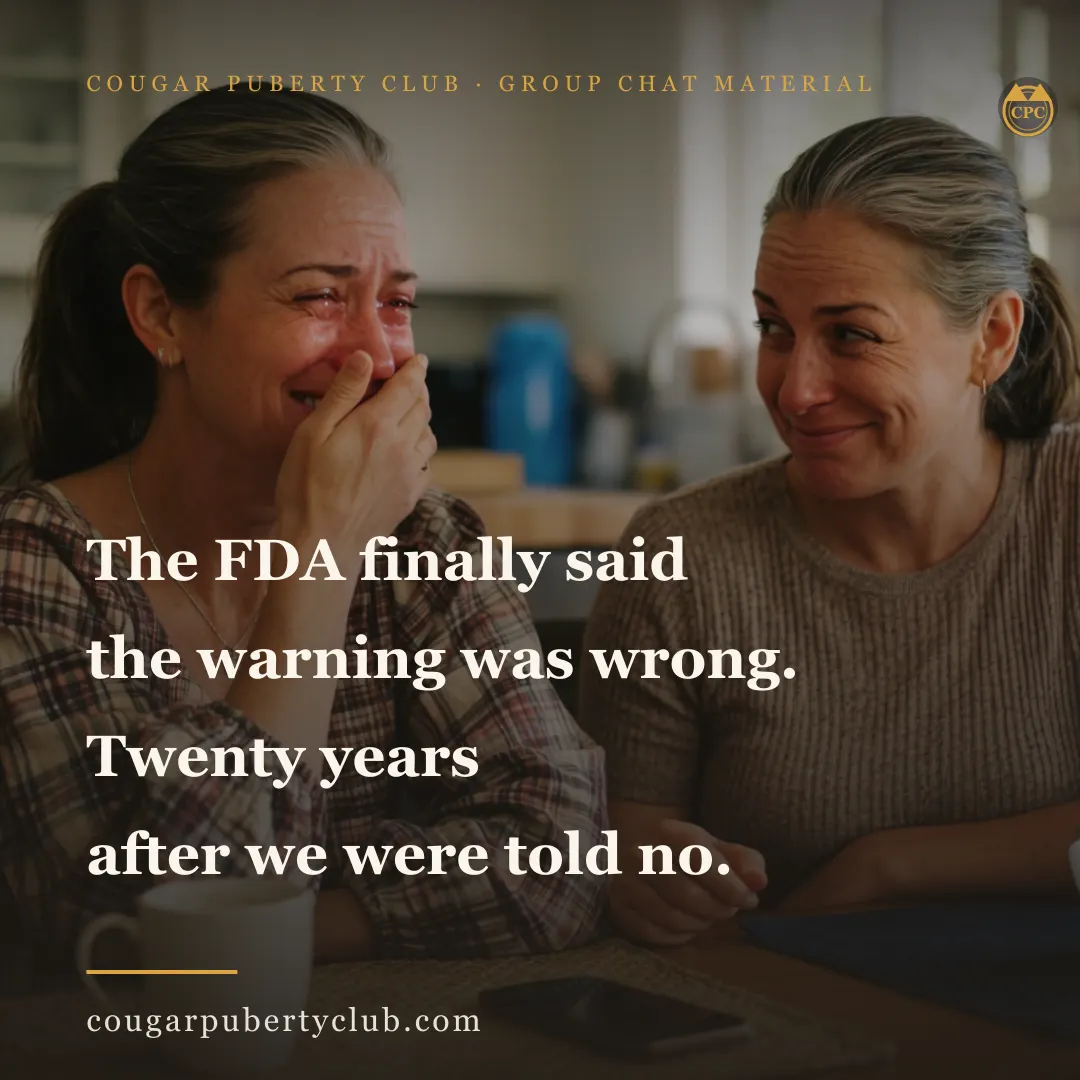
We made a card for that one.
The FDA finally said the warning was wrong. Twenty years after we were told no.
The grief-and-relief reckoning
Here's the part the news cycle doesn't have a segment for: the women being told "you were right all along" aren't celebrating. They're grieving – the lost decade, the lost energy, the years of being told it was stress or aging or in their heads.
The 82% survey stat explains why that grief is so quiet: if most of us blamed stress first, then most of us also told ourselves no before any doctor did Established: ThisIsMenopause. The black-box warning didn't just shape doctors' behavior. It shaped what women felt entitled to ask for.
This is also why the "take the symptom scorecard before you start" advice keeps coming up in the community: women forget how bad it was. The score is the receipt for your own suffering – and the memory that the brain fog erases.
The honesty section (this is still not a miracle drug)
The warning was overly broad. That is not the same as "HRT is safe for everyone, forever."
- The real indications are specific: hot flashes and night sweats, fracture prevention for those at high risk, genitourinary syndrome of menopause, and premature menopause Established: NPR.
- Most major medical organizations - the U.S. Preventive Services Task Force, ACOG, the Menopause Society - do not recommend hormone therapy for longevity, heart health, or preventing chronic conditions. It is not the fountain of youth Established: NPR.
- History still matters. A personal history of breast cancer, blood clots, heart attack, or stroke warrants an in-depth conversation before considering hormone therapy Established: NPR.
- The timing window is part of the story: the current framing is that benefits may outweigh risks when therapy begins within 10 years of menopause onset - and treatment should be individualized Established: CBS News.
If you were told no
If a doctor told you no in 2004 and you never asked again, the news is worth more than a group-chat reaction. It's a reason to revisit the question – with your symptoms, your history, and the current evidence, not with the 2002 version of the story.
And if the news is bringing up complicated feelings – relief for the women who get their lives back, grief for the years that don't – that's not a malfunction. That's the reckoning. It's what happens when the system that told you no finally says it was wrong, and you have to decide what to do with twenty years of trust lost.
If you're just getting oriented in the HRT conversation, start with what actually changed – then come back here for the part about what the change means when it's personal. When you're ready for the practical questions: how long you actually take HRT and what to do when it doesn't fix everything.