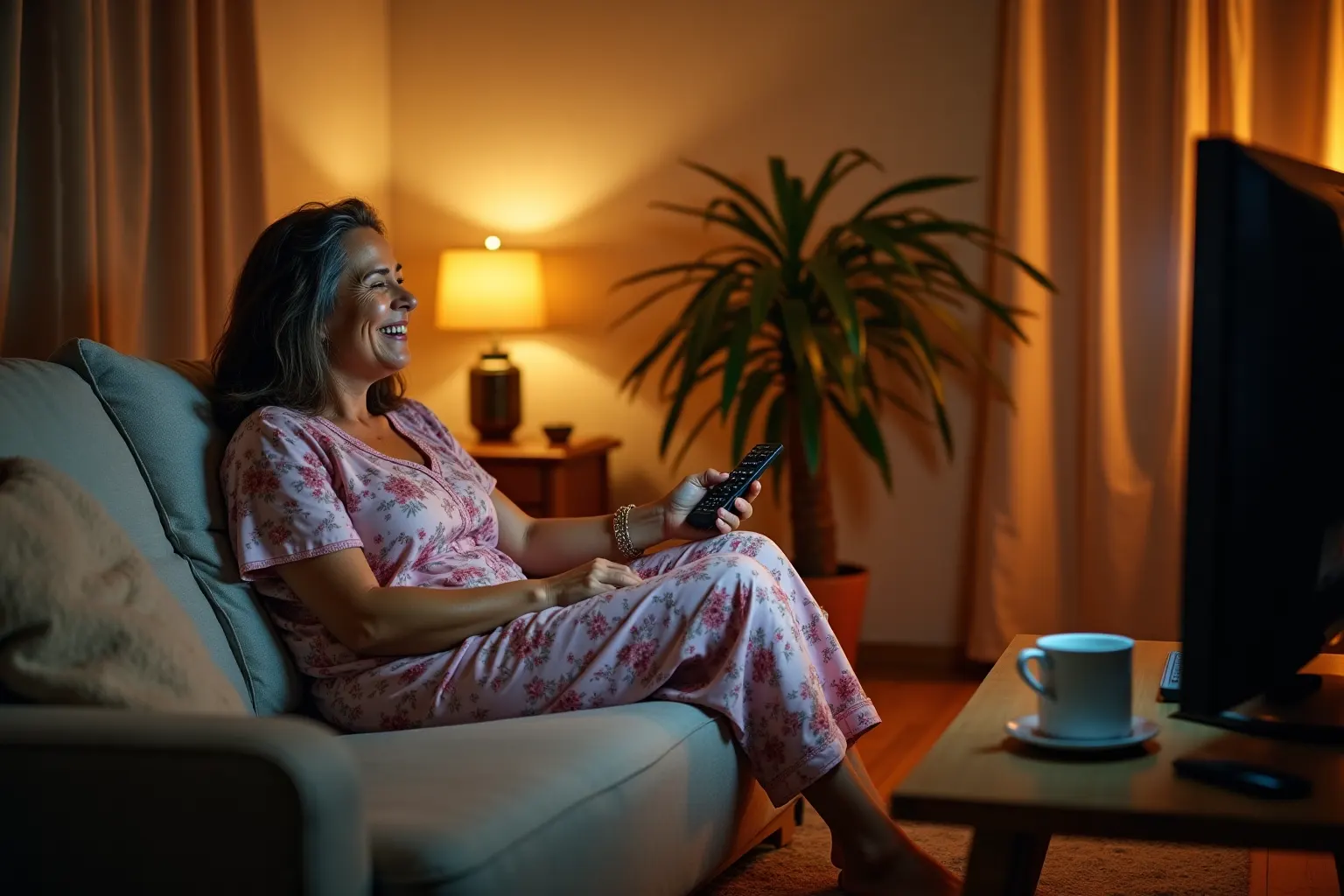
Here's a sentence you could not have written five years ago: this year, the hardest thing about watching television with your group chat is deciding which midlife-woman story to start.
2026 is the year menopause stopped being the punchline and became the plot. Not the PSA plot -- the plot plot. The kind where the woman is funny, furious, tired, and horny for a life she recognizes, and the show is not about curing her.
The search term is real: women are typing "menopause tv shows" and getting back... well, mostly ads for supplements and one (1) awkward network sitcom from 2019. The culture moved faster than the search results. So here's the actual watchlist -- spoiler-light, group-chat approved, ranked by how many times you'll hit your friend with "that is literally me."
Riot Women (BBC) -- start here
Sally Wainwright -- the woman who gave us Happy Valley, the most quietly furious television of the last decade -- wrote a show about midlife women starting a punk rock band. The New York Times put it bluntly: "Think Punk Rockers Are Angry? Meet These Menopausal Women." NYT via our Riot Women source British Vogue ran an essay from Wainwright herself about why she wrote it. ELLE called it "feminist and hilarious." Vogue / ELLE via our Riot Women source
The premise is almost too perfect: a group of women who have spent their lives being reasonable pick up instruments instead of a hobby. It's the fantasy every one of us has had since roughly the second time someone at work asked us to "tone it down." You don't watch it to learn anything. You watch it to remember that the anger is material -- and that it has a beat.
One honest note: it's a BBC show, so US viewers are finding it through word-of-mouth and streaming -- which is exactly how it spreads. It's the rare piece of media that's better in a group chat, because half the fun is the "I'd be the bass player" casting debate.
Hot Flash (feature film) -- the one that's about her, not about symptoms
While Riot Women was building its audience, a feature film called Hot Flash started shooting in Yorkshire, and the BBC's coverage of it reads like a love letter to an audience that's been ignored: a single mum in her 40s -- "a failed hairdresser, she's grasping at life and she's deeply in the menopause," per the film's own description -- navigating everything with humor intact. BBC, Feb 4 2026
Written and produced by Jan Birley, starring Leeds actress Gaynor Faye (daughter of the late great Kay Mellor), the film was built from real Yorkshire women's stories -- the casting call literally invited local women to share their menopause experiences. That's not a gimmick; it's the whole thesis. The recognition isn't performed. It's sourced.
This is the one to watch when you need the specifics: the failed-hairdresser-specifics, the "I don't have a partner to blame this on" specifics. Not a lesson. A story.
Peggy & Marge -- the cartoons caught up
The comfort-media entry, and the one that broke the group chats wide open: King of the Hill's revival gave Peggy Hill a full menopause episode ("Ch-Ch-Ch-Changes," S15E6), and The Simpsons made Marge's perimenopause a plot ("Parahormonal Activity," S37E11) -- the whole house in hormonal chaos at once, Bart and Lisa hitting puberty while Marge goes through it. King of the Hill S15E6 source
The generational gut-punch is the thing: we grew up at Bart and Lisa's eye level, and now we're Marge and Peggy. We wrote the whole thing up -- including which cartoon symptoms check out against the actual perimenopause list -- in Peggy & Marge Are Us Now. The short version: the thermostat wars are real, the 3 a.m. wake-ups are real, and the "why does no one in this house respect my temperature" rage is deeply real. NHS perimenopause symptoms
The "watch with your group chat" method
Here's how to actually use this list:
- Riot Women is the group watch. Everyone shows up, someone makes the playlist, and you spend the credits arguing about who'd play drums.
- Hot Flash is the solo watch that you then text about. Put it on when you need the recognition without a discussion. Text the receipts after.
- Peggy & Marge is the one you send a clip of, at 11 p.m., with no context. Everyone knows exactly what it means.
That's the whole trick of this era: the media finally showed up, and the viewing experience is a group project. Because it turns out the thing we were all missing wasn't an explanation. It was a mirror -- one we could pass around.
The one honest caveat
None of these are documentaries, and none of them are medical advice. Perimenopause symptoms vary wildly -- hot flashes and night sweats are the most common, but they're far from the whole list NHS. The shows are doing something different from the medicine: they're making the experience watchable, which is its own kind of treatment. Watch them, send them, and let the recognition do the rest.