The pitch is everywhere now: cold plunge for menopause. Wellness-bro podcasts, Instagram reels of women in robes stepping into wooden tubs, and a genuinely decent study out of University College London that the hype machine has already stretched into something it isn't.
So let's do what this site does: read the actual study, tell you what it proves and what it doesn't, and then give you the safety rules that matter more than any of it.
What the UCL study actually found
In January 2024, researchers at UCL's EGA Institute for Women's Health – led by Professor Joyce Harper – published a survey of 1,114 women (785 of them diagnosed with menopause) who regularly swam in cold water. The headline numbers, among the women who took up cold swimming:
- 46.9% reported improved anxiety
- 34.5% reported improved mood swings
- 31.1% reported improved low mood
- 30.3% reported less intense hot flashes
Established: UCL / Post Reproductive Health
Thirty percent reporting less intense hot flashes is real. It's also not "cures hot flashes," which is how you'll see it framed by people selling $4,000 tubs.
The part the reels leave out
The study is an online survey of women who already chose to cold-water swim. Study authors are upfront that women were more likely to complete the survey if they'd already noticed a connection between their symptoms and the water. That's selection bias, and it means the study shows association, not proof of cause and effect.
Also worth knowing: 63.3% of participants started cold water swimming specifically to relieve their symptoms, and most women said their main motivations were being outdoors, mental health, and exercise. Longer swims and colder water came with more pronounced reported effects – but again, that's self-report, not a controlled trial.
The honest summary: cold water swimming is associated with real symptom improvement in a large group of women, and we don't yet know the right dose, temperature, or duration. Harper herself: more research needed on frequency, duration, temperature, and exposure.
The safety rules that matter more than the hype
Here's where this gets serious, because the same people selling the plunge also skip this part. The British Heart Foundation is very direct about what entering very cold water does to your body: it triggers cold shock – a faster heart rate, higher blood pressure, and shortness of breath. Cold water raises stress hormone levels and the risk of abnormal heart rhythms (arrhythmias) and possibly cardiac arrest. The colder the water, the harder the heart has to work. Established: British Heart Foundation
So, the non-negotiable rules:
Never plunge during a hot flash. This is the one nobody says. A hot flash is a sudden surge of heat with a racing heart and flushing. Layering sudden cold shock on top of an already-racing cardiovascular system is exactly wrong. Let the flash pass. Cool down gradually – fan, cool cloth, water. Cold water is for calm moments, not emergency cooling.
Heart or circulation concerns? Doctor first. High blood pressure, a heart condition, or a family history of arrhythmias means this conversation happens with your clinician before it happens with a tub. BHF cites cardiac physio guidance that 26–33°C (79–91°F) water is safest for people with heart conditions. For most of us that means a heated pool – not a January lake.
Entry is everything. Enter and exit gently and gradually so your body adjusts to the temperature change. Warm up and cool down at a slower pace. Allow at least an hour after a meal. Only swim when you're feeling well.
Never swim alone. Go with a friend or a group. The UCL study authors add the outdoor realities: hypothermia, cold water shock, and drowning are real risks – and water quality varies, with sewage pollution an increasing concern in UK rivers and seas. Check the water quality before open-water swims.
The cold water sisterhood is the part the study can't measure
Here's what the numbers undersell, and it's the reason this is a CPC story at all. The study's own participants described the water as "an immediate stress/anxiety reliever" and "healing." One 57-year-old: "In the water, I can do anything. All symptoms disappear and I feel like me at my best."
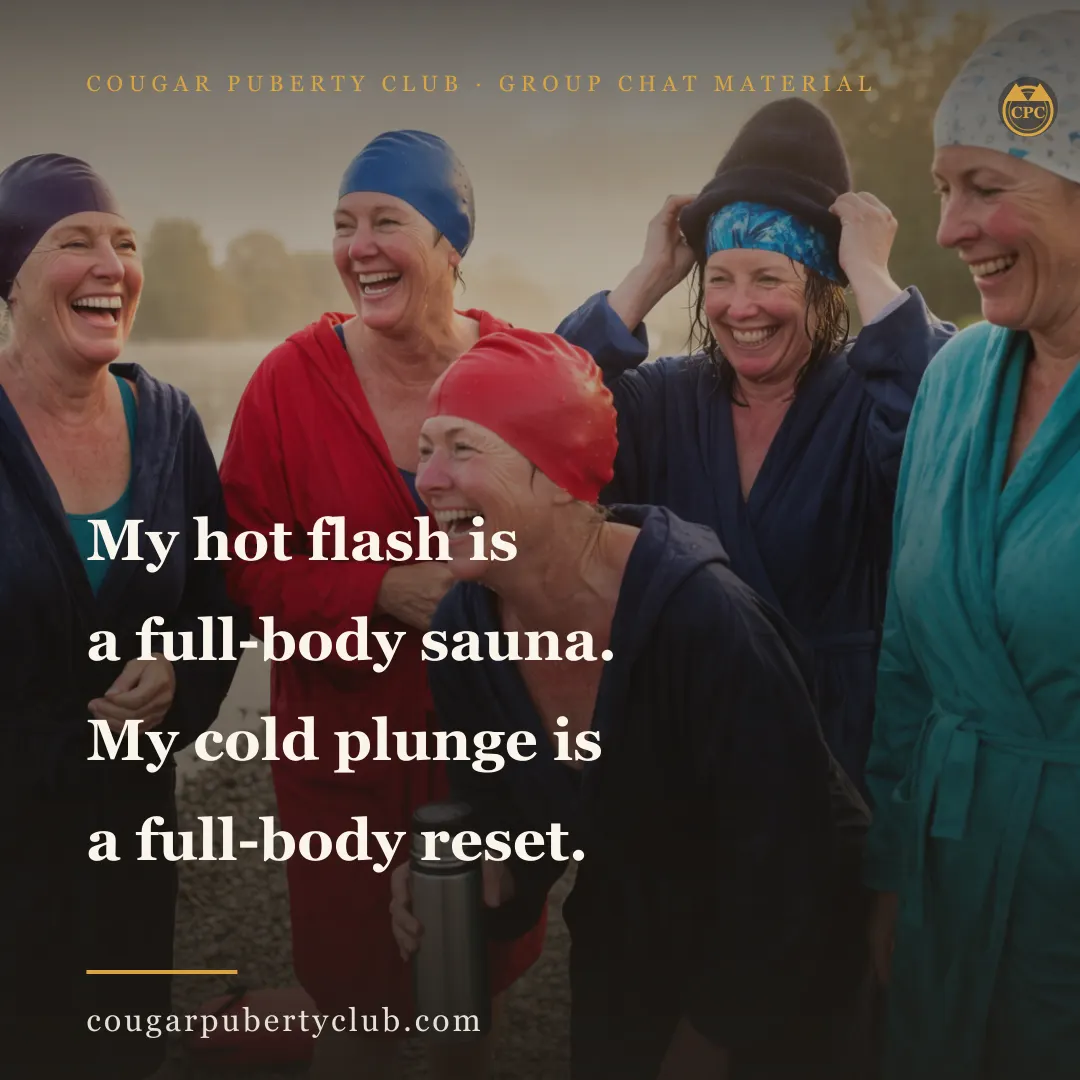
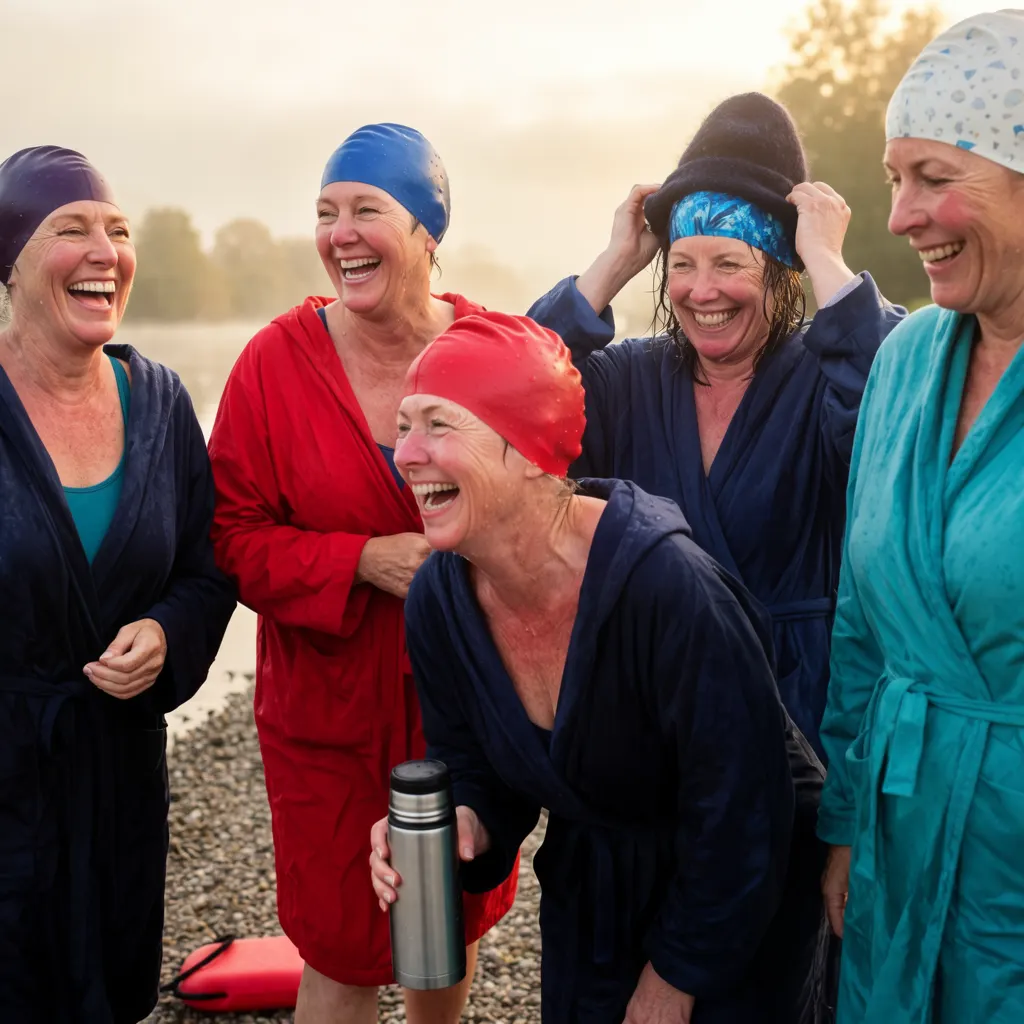
That's the 50+ wild-swimmer community: women who found each other in cold water at 7am, in robes on a pebble shore, tow floats bobbing behind them. The group chat version is "my menopause support group is a pond." The belonging might be doing as much work as the temperature – and the belonging has no cardiac risk profile at all.
Cold water is not a cure. It's a complement – one with real reported benefits, real cardiac caveats, and a genuinely lovely side effect: a community that shows up in November.
If hot flashes are wrecking your sleep or your life, don't trade the doctor conversation for a tub. The NHS says contact a GP to discuss options, and hormone therapy and non-hormonal treatments have decades more evidence behind them than any cold plunge Established: NHS. Start the conversation. Then, if your clinician clears it and your heart's on board – the pond will still be there.
Cold water can improve blood pressure and blood fats when practiced regularly by people in good general health Established: BHF – but the cardiac safety conversation comes first, full stop.