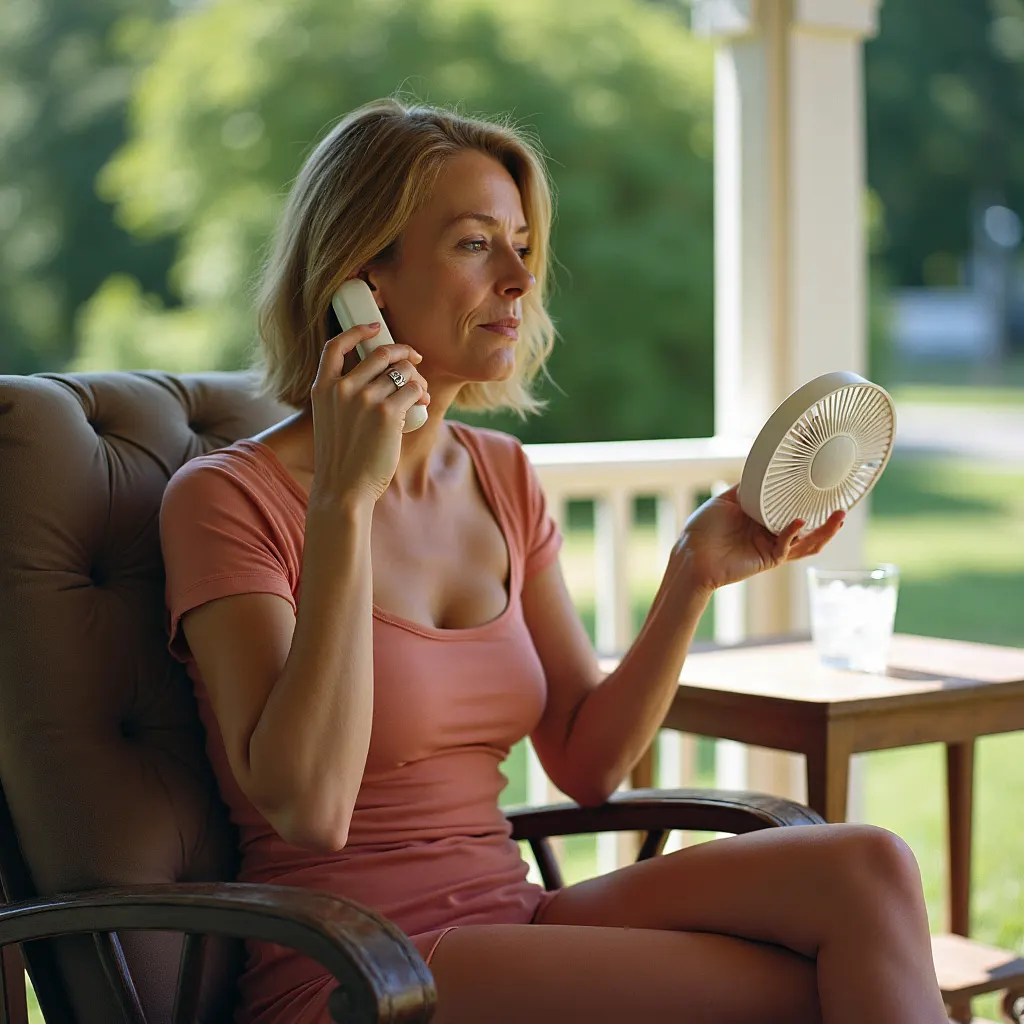
You know the wall. It arrives between two and five in the afternoon, and it isn't tiredness you can talk yourself out of. It's the moment your body simply stops accepting requests. You sit down for a second and wake up an hour later, or you stare at the fridge with no plan, or you answer your partner's innocent question with a version of yourself you don't recognize.
Then you get eight hours of sleep. Eight! And wake up like you didn't. The alarm goes off and your first thought is not "good morning," it's "already?"
This is perimenopause fatigue. It is the most common complaint of this entire era. A 2026 wave of reporting put it near 95% of women identifying as perimenopausal, ahead of hot flashes, and the federal and clinical symptom lists agree it's one of the most commonly reported experiences of the transition Established: OWH, Established: Cleveland Clinic. Yet it's the symptom nobody warns you about, and the one everyone, including you, is most likely to gaslight.
So let's take it seriously. Here are the files.
The 2-5pm Exhaustion Wall
It has a schedule, which is the first clue it's hormonal and not moral. Most women who experience it describe the same window: the afternoon wall where the body's energy account hits zero and overdraft fees apply. It's not that you're lazy at 3pm. It's that you're fine at 11am and done at 4pm, and the difference is too consistent to be a personality flaw.
The exhaustion paradox makes it worse: eight hours in bed, still exhausted. Declining estrogen contributes to fatigue through multiple routes: sleep disruption, night sweats that fragment rest, and changes in how the body regulates energy Established: Cleveland Clinic. You're not sleeping badly and imagining it; you're sleeping badly and noticing it.
The wall is also where the shame lives. High-achieving women in particular treat a 3pm collapse as a personal failure, which is how you get the second flavor of exhaustion: the guilt about being exhausted, which costs more energy than the exhaustion itself.
"I Thought It Was July": The Summer Misread
Here's a specific, extremely common pattern: women in their 40s and 50s blame crushing exhaustion on summer heat, on stress, on "everyone's tired", and then the "summer tired" never leaves in October. One woman's framing, from our research: "I blamed the heat for a year before I blamed my hormones."
That misread is understandable: heat genuinely does make everything worse. But it's also how a year of perimenopause gets a free pass. If you've been waiting for the weather to fix your energy, and the weather changed and your energy didn't, the weather was never the problem. It was the loudest available explanation.
Push-Through Culture Is the Enemy
The exhaustion wall is made of physics, but the refusal to respect it is made of culture. We were raised on the competent-woman script: power through, hold it together, the to-do list is the measure of a day. Perimenopause is the first time that script has a physical veto, and the first instinct is to fight it: more coffee, more willpower, more pretending.
Here's the uncomfortable truth: pushing through a hormonal energy deficit doesn't produce more output. It produces more exhaustion tomorrow, plus a resentment bill that gets paid at whoever happens to be home at 6pm. The women who stabilize aren't the ones who tried harder; they're the ones who stopped fighting the wall and started planning around it.
Pacing: The Energy Budget That Works
Nobody wants "self-care" advice. Here's the operational version: energy budgeting. The goal isn't to feel less tired (that's a trap). It's to spend your real energy on things that matter to you and let the rest be late.
- Protect the wall window. If your body stops at 3pm, stop scheduling hard things at 3pm. Meetings, decisions, difficult conversations: morning. This is logistics, not surrender.
- Bank energy, don't borrow it. The push-through model borrows from tomorrow. Pacing spends today's budget and stops before the overdraft.
- Name the wall out loud. "I'm hitting my wall" is a complete sentence. It reframes the afternoon collapse from a personality defect to a schedule, and schedules can be managed.
- Sleep hygiene is not optional now. The 3am wake-up, the night sweats, the racing thoughts: they're not separate problems from the daytime exhaustion; they're the same problem in two shifts. (We have a whole night-sweats starter guide and the 3 AM shopping list if that's your flavor of broken sleep.)
And yes, the same brain fog that makes you forget the word for colander is running in the background of all of this. When your brain is refusing to think hard, it's not a separate issue from the fatigue; it's the fatigue wearing a cardigan. (Read the brain fog explainer.)
The Red Flags: When "I'm Exhausted" Deserves a Doctor Conversation
Here's the thing about perimenopause fatigue: it's real, it's common, and it's also a terrific disguise for three other conditions that are more common in this exact demographic and are all fixable. The doctor conversation isn't "prove you're tired". It's "check the other suspects so we can treat the right one."
1. Sleep apnea. Perimenopause is a classic time for sleep apnea to emerge or worsen. Hormone changes affect airway tone, and weight distribution shifts don't help. Its daytime calling card is exactly perimenopause fatigue: exhaustion despite "enough" sleep, brain fog, morning headaches, mood changes Established: NHLBI, Established: NHS. If you snore loudly, gasp or choke in your sleep, or your partner says you stop breathing: that's not "tired peri woman", that's "ask for a sleep study." Screening is an NHS referral; there is no product for this, and anyone selling you one for apnea is selling you a story. (The full sleep-apnea-vs-peri explainer is here.)
2. Underactive thyroid. Tiredness, weight gain, feeling cold, low mood, aches: the hypothyroidism symptom list is perimenopause's evil twin Established: NHS. It's more common in women and more likely with age. The good news: it's one blood test, and it's treatable. If your energy has cratered, a thyroid function test belongs on your list, not because you're imagining the peri, but because you can have both.
3. Anaemia. If you're in perimenopause, there's a decent chance your periods have been doing their own thing, and heavy bleeding is a direct line to iron deficiency, whose symptoms are tiredness, breathlessness, palpitations, pale skin Established: NHS. This one is especially worth checking before you reach for supplements: iron is a legitimate lever for fatigue, but only if you're actually deficient. The blood test comes first; the supplement comes second; the random iron pill comes never.
The phrase that gets you taken seriously: "I'm exhausted and I'm not imagining it. Can we check my thyroid, my iron, and whether a sleep study is appropriate?" That's not a complaint. That's a differential diagnosis request. You're allowed to make it.
What About Supplements? (The Honest Shelf)
The supplement aisle is where fatigue goes to get scammed, so let's be precise. For perimenopause fatigue specifically, three supplements have a legitimate-if-modest case, and none of them are miracle cures:
- Iron (only if a blood test says you're low). For women with heavy periods, deficiency is common and fixing it genuinely restores energy. (Iron supplements on Amazon)
- Magnesium (the sleep-and-recovery argument is the most plausible one; some women report it softens the wired-but-tired feeling, especially with 3am wake-ups). Evidence is mixed, so treat it as an experiment, not a protocol. (Magnesium supplements on Amazon)
- Creatine (the new darling of the peri communities for brain fog and muscle maintenance, and the last untried lever in a lot of threads). The research is early; the logic (energy availability for brain and muscle) is real; the hype is ahead of the evidence. (Creatine on Amazon)
None of these replace the doctor conversation above. The order of operations is: rule out thyroid/iron/apnea, then experiment with supplements, then evaluate honestly.
The FAQ
Is this normal, or am I actually sick? Both things can be true. Perimenopause fatigue is normal and it can coexist with thyroid, anaemia, or sleep apnea. Normal doesn't mean unfixable, and it doesn't mean you don't deserve the blood tests.
Why am I so tired even though I sleep 8 hours? Because perimenopause sleep and daytime energy aren't just about hours. Night sweats, 3am wake-ups, and hormonal shifts fragment the sleep you do get and change how energy feels the next day. The 8 hours are a lie if 6 of them were broken.
Will HRT help with fatigue? For many women, yes: treating the underlying hormonal picture often improves sleep and energy, which is what makes the fatigue better. It's a conversation with a clinician, not a guess. (Hormone therapy questions, answered)
When should I actually worry? The exhaustion deserves attention when it's new, persistent, or paired with: loud snoring or witnessed breathing pauses, shortness of breath, palpitations, feeling cold all the time, or heavy periods. That's the checklist for the doctor conversation, not for the internet.
The Bottom Line
The exhaustion wall is not a moral failing. It's the most common symptom of the most common transition women your age are going through, it has a schedule, and it responds to being managed rather than fought.
Blame the heat for the summer. Then, when the heat leaves and the tired stays, blame the right thing, and bring the blood tests with you.