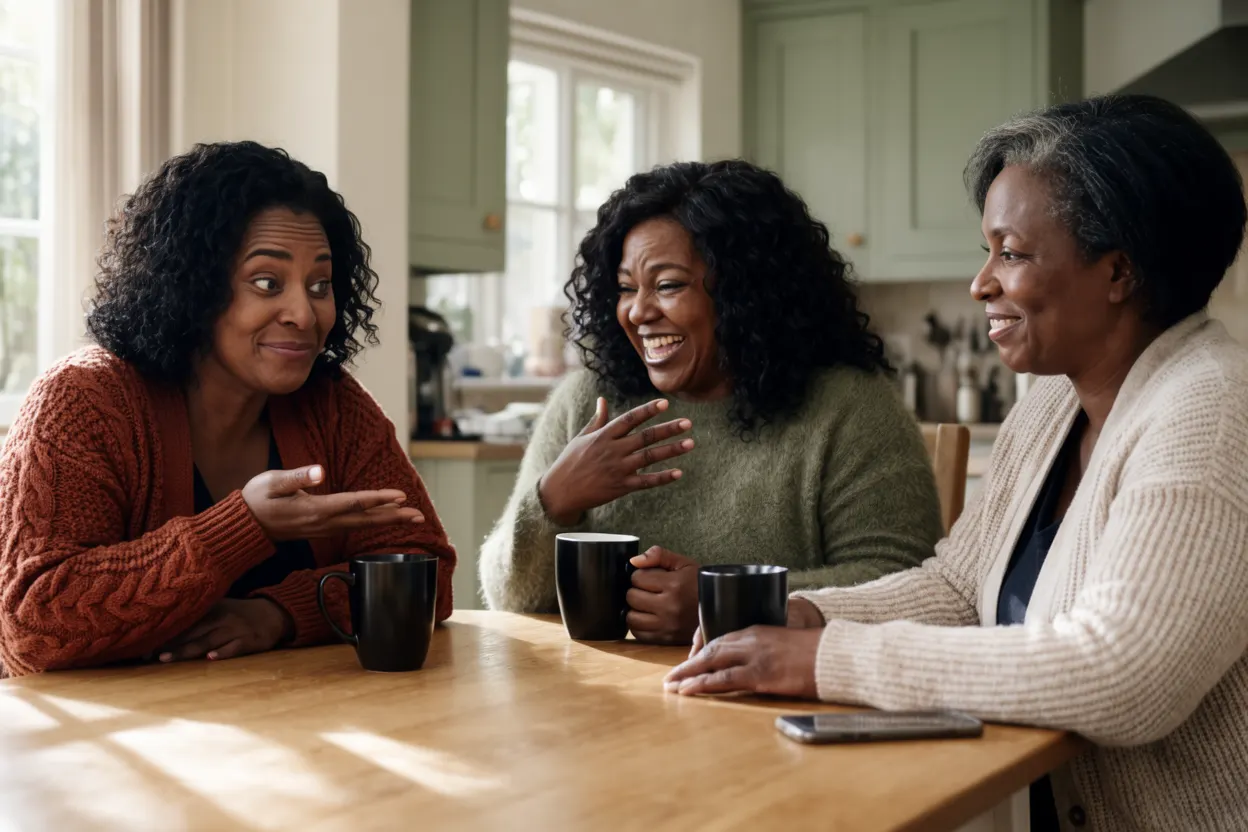
On September 2, 2026, a woman did something on r/Menopause that would have been unthinkable in her mother's generation: she asked strangers to help her help her mom.
Looking for advice from Black women who have been through menopause, the post said, essentially. Trying to help my mother. Thirty-nine comments later, the thread had done what decades of family silence couldn't: it handed the daughter the real numbers, the real timeline, and the name of the kind of doctor her mother had probably never been offered.
That daughter is the new family role. Not the caregiver exactly - the navigator. The one who reads the studies her mother was never handed, who knows the window before her mother was told there was one, who can find the doctor who won't hear a Black woman's symptoms through the "you're fine, you're strong" filter.
Here's your kit.
The numbers that make you the expert your mother never had
You can't navigate with vibes. You need the numbers, because the numbers are what your mother's doctors - and your mother - have been missing.
The duration one first, because it's the one that changes everything. In SWAN - the Study of Women's Health Across the Nation, one of the largest and longest-running studies of the menopause transition in the US - the median total duration of hot flashes and night sweats was about 7.4 years. Frequent symptoms lasted more than seven years for more than half the women who had them, and kept going about 4.5 years past the final period Established: JAMA Internal Medicine.
Then the number your mother's pamphlets left out: for Black women, that symptom window runs roughly 10.1 years - versus about 6.5 for White women Established: JAMA Internal Medicine.
Ten years. That's not a rough patch. That's a decade of interrupted sleep, night sweats, and being told it's nothing - and research reported in 2026 indicates Black women's symptoms also tend to start earlier and hit harder Research: UCL via FemTech World.
Say it out loud so it lands: your mother wasn't weak for struggling with this. She was running a ten-year race nobody told her she was in.
The window, without the panic
The other number floating through that thread is the "10-year window," and it deserves precision, because it's the difference between a useful push and a fear-based shove.
In September 2026, a new analysis of 20 years of SWAN data - the first US study of its kind - found that women who started hormone therapy for hot flashes and night sweats in peri- or early postmenopause had 22% fewer cardiovascular events over the follow-up period. The association was strongest among Black women and among women who started within about 10 years of menopause onset Established: JAMA Internal Medicine via VCU Health.
Read that carefully, because it does two things at once. It says the old "just wait it out" advice cost women like your mother real time. And it says nothing about your specific mother - the study's own authors are explicit that it's observational and shouldn't guide individual treatment decisions on its own Established: JAMA Internal Medicine via VCU Health.
The honest translation: if your mother is in her 50s and still having symptoms, the conversation is worth having now, because the data says timing mattered. If she's past that window, that's a different conversation with different options - not a closed door. Either way, the window is why "I'll deal with it later" is the one sentence you're allowed to gently challenge.
The doctor hunt
The r/Menopause commenters said it plainly: find a Black gynecologist - or at least one who knows these differences. Here's the operating manual for that search, because "just Google it" is how you end up at a clinic that books you with whoever's free.
What you're screening for is two things bundled: actual menopause competence (training or a stated specialty, not an OB-GYN who happens to see it), and a clinician who won't hear your mother through the strong-Black-woman filter that UCL research identified as a primary barrier to care Research: UCL via FemTech World.
Then interview them. At the first appointment, your mother (or you, with her permission) asks:
- "How many of your patients are in the menopause transition?"
- "What's your take on the timing research - the data that starting earlier matters?"
- "My symptoms started years ago. What are my options at this point, hormonal and non-hormonal?"
A clinician who treats those like a colleague's questions is the one. A clinician who waves them off has just demonstrated, live, why you're doing this at all.
How to help without turning your mother into a project
Here's the part no research paper will write for you, and it's the part that decides whether any of this works.
Your mother's silence is not stubbornness. It's inheritance. The women in her family were raised to carry on, to be dismissive about their own symptoms, to treat menopause as unspoken business Research: UCL via FemTech World. When she says "I'm fine," she's not lying to you - she's reciting the script she was handed before you were born. You can't argue someone out of a script. You can only hand them a better one.
So: facts about you, not accusations about her. "I read Black women's hot flashes can last ten years. Did anyone ever tell you that?" lands completely differently than "You need to see a doctor." The first is a gift of information. The second is a performance review.
Bring the research, never the verdict. Your job is the studies, the shortlist of doctors, the appointment logistics, the second set of ears in the exam room. Her job is the choice. The moment you start managing her treatment from a blog, you've become the thing she's been avoiding - another person telling her what to do with her body.
And the biggest one: if she's not ready, she's not ready. Leave the door open - "I found someone who specializes in this, I'll come with you if you ever want" - and let it be. The thread's daughter got 39 comments of help because she asked. Your mother gets to say not yet. What matters is that she now knows the door exists, and that you know the numbers behind it.
The bottom line
Here's what the September thread understood that the medical system is still catching up to: sometimes the person who changes a Black woman's menopause isn't a doctor at all. It's her daughter, at a kitchen table, reading the study the doctor never mentioned.
You don't need to be a clinician to do this. You need three numbers (10.1 years, 6.5 years, and the fact that timing mattered), one search strategy, and the grace to help without hovering.
Your mother carried the silence for you. You get to carry the research for her. That's the trade - and it's the first one that generation ever got.
Cougar Puberty Club is a media brand, not a medical practice. This article is education and context, not diagnosis or treatment advice. Hormone therapy decisions belong between a woman and a qualified clinician. If you're helping someone whose symptoms are interfering with her life, that's a reason to keep asking until you find a doctor who listens.