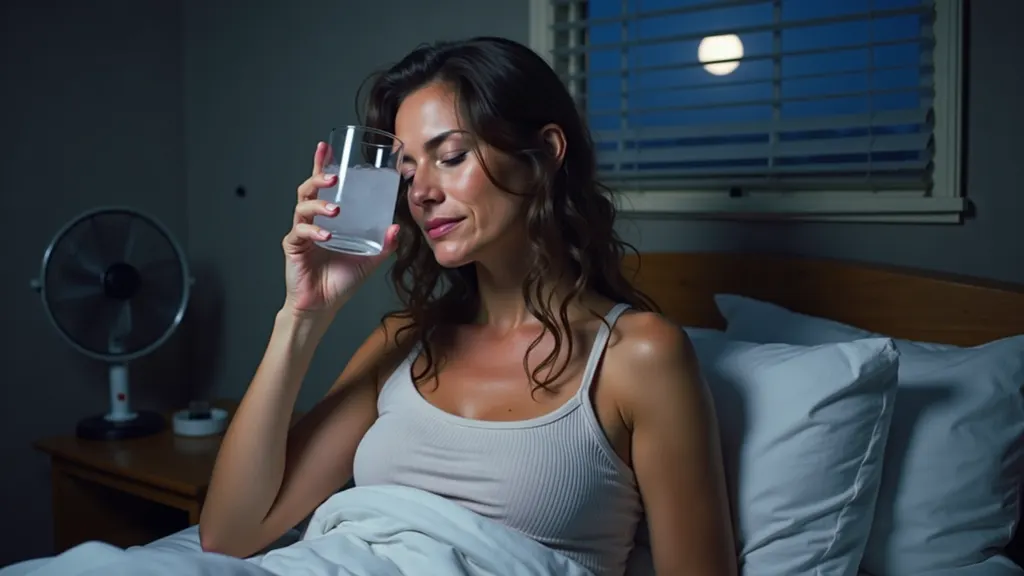
The short answer: if you wake up with your nightclothes and sheets genuinely soaked (in a room that is not too warm), that is a night sweat. Night sweats are hot flashes that happen while you sleep Established: The Menopause Society. In perimenopause, they are one of the most common ways the transition announces itself at an ungodly hour.
First, what counts as a night sweat
Sweating a little at night, especially under a heavy duvet in July, is not a night sweat. The NHS is specific about this: night sweats are sweating enough to soak your nightclothes or bedding even though where you are sleeping is cool Established: NHS. If you are waking up damp around the collar, that is sweat. If you are waking up to change shirts and flip the pillow, that is a night sweat.
Does the 3 a.m. timing mean anything?
Night sweats are hot flashes that occur during sleep Established: The Menopause Society. Authoritative patient guidance does not assign a special meaning to 3 a.m. The useful information is the pattern: how often you wake, whether the bedding is soaked, which medicines you take, and whether fever, cough, diarrhea, or unexplained weight loss comes with it. Write those details down. They are more useful to a clinician than the exact minute on the clock.
For the record: hot flashes and night sweats affect a large share of women in the transition; the Menopause Society cites up to 80 percent, lasting on average 7 to 10 years Established: The Menopause Society. If you are in that club, you are in the majority, not the anomaly.
What else causes night sweats
Menopause is a common cause, not the only one. The NHS lists these as the usual suspects Established: NHS:
- Menopause symptoms (hot flushes)
- Anxiety
- Medicines: some antidepressants, steroids, and painkillers
- Low blood sugar
- Alcohol or drug use
- Hyperhidrosis, a harmless condition of excessive sweating
Sometimes the cause is never pinned down. That is unsatisfying but true, and it is part of why assessment exists: to rule out the treatable and the serious, not to give you a perfect explanation.
When night sweats need an assessment
Not every night sweat needs a doctor. These do, per NHS guidance Established: NHS:
- They regularly wake you or worry you
- They come with a very high temperature, or feeling hot, cold, or shivery
- They come with a cough or diarrhea
- You are losing weight for no reason
None of that is a perimenopause thing to white-knuckle through. And one more, from the federal side: night sweats are defined as hot flashes at night that cause sweating, so if they are new, frequent, and paired with other new symptoms, that is exactly the kind of thing to lay out for a clinician Established: NIH MedlinePlus.
What helps while you sort it out
The low-effort, low-risk list from federal guidance: dress in removable layers, keep a fan or cold water nearby, and keep the bedroom dark, quiet, and cool Established: OWH and NIH. None of this is a cure; it is triage for your sleep.
If you're ready to go beyond triage: we researched what actually helps with the temperature problem, from cooling sheets that don't feel like a science experiment to pajamas designed for the three-shirt-a-night crowd. Verdicts included, no miracle claims.
For the fuller program (including why "just sleep cooler" is more complicated than the mattress ads suggest), see the cool bedroom guide.
If night sweats are repeatedly wrecking your sleep, that is also a treatment conversation, not just a coping conversation. Hormone therapy is one evidence-based option for bothersome vasomotor symptoms; nonhormonal options also exist, and the choice depends on your symptoms, history, and preferences Established: The Menopause Society. The questions in our hormone therapy article can help you prepare without steering you toward a particular treatment.
The bottom line
Waking up soaked at 3 a.m. is a symptom, not a character flaw, and one of the signature experiences of what we call cougar puberty. Note how often it happens, whether anything else tags along, and whether it is disturbing your life. If it happens regularly, worries you, or arrives with the symptoms above, arrange an assessment. If it is occasional and you otherwise feel well, the troubleshooting shelf offers low-risk comfort measures while you keep an eye on the pattern.
- Perimenopause sleep troubleshooting: a field guide
- Sleep & night sweats topic hub
- Perimenopause 101
- Every source behind this article
Want more of this? Join the 3 AM Club, our newsletter for people who are awake at weird hours. One useful thing, one surprising find, one thing that'll make you laugh. No spam, no creepy tracking.