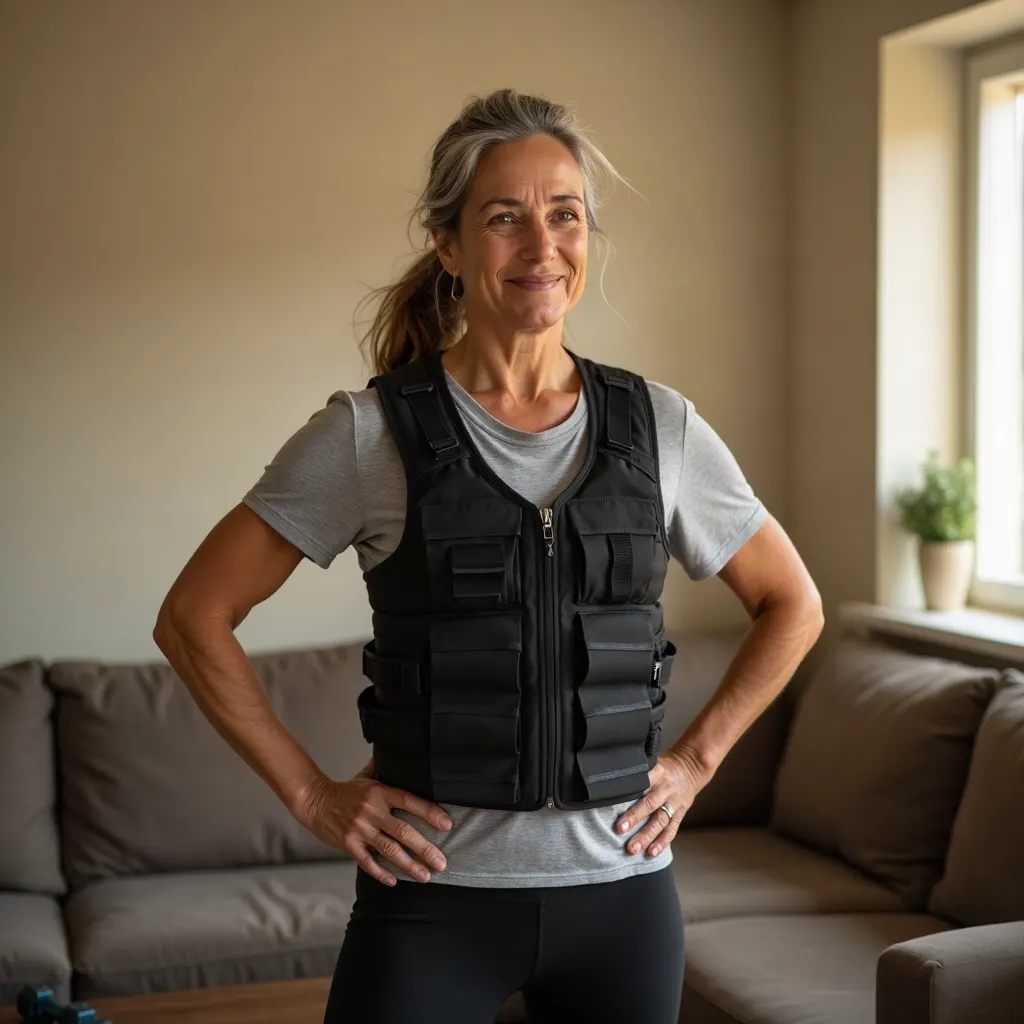
The Kansas City Star did the thing where a fitness trend finally gets mainstream coverage: estrogen decline during menopause quietly strips bone mass, and weighted vests - the thing you used to see only on CrossFit guys who post their WODs - are now the midlife bone-health answer Trend context: Kansas City Star.
And the group chat wants to know: is this real, or is this another $89 piece of equipment that's going to live in the hall closet next to the ab wheel?
Both. It's real and it's going to live in the hall closet unless you understand what it's actually for.
The mechanism is not a scam
Here's the part the trend pieces get right: bone is living tissue that constantly remodels, and it responds to load Established: NHS. That's why weight-bearing exercise is in the bone-health prevention picture at all - the skeleton adapts to what you ask of it.
As estrogen drops through the transition, the balance shifts toward bone loss, and women lose bone rapidly in the first few years after menopause Established: NHS. That's the problem the vest is trying to answer: if your skeleton needs loading, a vest adds load to the movement you already do - the walk, the stairs, the Costco run, the standing-in-the-kitchen-while-everyone-ignores-you.
That's not nothing. That's the actual mechanism, applied to a Tuesday.
The honest verdict on the trend
A weighted vest is a loading tool. It is not a proven medical treatment, and anyone who sells it to you as "the bone-density fix" is selling you a sentence they can't back up. The long-term studies that prove vests specifically prevent fractures don't exist yet - the 2026 wave is mechanism plus enthusiasm Trend context: Kansas City Star.
Here's what the evidence actually supports: regular exercise and strength training are part of the bone-health prevention picture Established: NHS, and strength training specifically is framed as a core protective habit in menopause musculoskeletal guidance Established: NHS MSK leaflet. The vest is the accessible entry point to loading. The barbell is the bigger lever. They're teammates, and the vest is the one that shows up at your house in a box.
How to do it without being an idiot about it
If you're going to try it, the common practice guidance is simple and it rhymes with every other fitness advice you've ever ignored:
- Start around 4-8% of your bodyweight. That's the fitness-community convention, not a clinical prescription - the real rule is "light enough that your walk looks like your walk."
- Build slowly. Add weight over weeks, not days. This is a bone conversation; patience is the whole game.
- Wear it for movement, not for sitting. The vest earns its keep on walks, stairs, and chores - not on the couch. (Yes, someone needs to say it.)
- Form is the tell. If your posture or gait changes, it's too heavy. That's not weakness; that's your skeleton sending a memo.
Who should absolutely not buy one without a conversation first
This is the part the trend coverage skips, so here it is in bold: if you have an osteoporosis or osteopenia diagnosis, a history of spinal compression fractures, significant back or disc issues, pelvic floor concerns, or a high falls risk - the vest is a clinician conversation first, not an impulse buy.
The NHS's prevention message is regular exercise and strength work, but loading is only protective when it's matched to the body you actually have Established: NHS. The scariest thing about the silent bone-loss problem is that you don't know your starting point until you look - which is exactly why the DEXA conversation comes before the shopping cart.
The actual order of operations
The trend pieces want you to feel like buying the vest is the health decision. It's not. The order is:
- The DEXA-first framing. Perimenopause bone loss is silent until it isn't Established: NHS. If you're in the early-menopause group, have a parent with a hip fracture, or have ever broken a bone from a minor impact, ask about a scan before you spend $89 on gear.
- Strength training as the anchor. The boring, proven lever. The vest adds load to Tuesday; strength work builds the reserve that actually protects you Established: NHS MSK leaflet.
- Calcium and vitamin D, as a pair. The NHS prevention list includes foods rich in calcium and vitamin D plus a daily supplement containing 10 micrograms of vitamin D Established: NHS. Support, not treatment. (Browse calcium + vitamin D3.)
- Then, if your body's a yes: the vest.
And yes, the vest has a social side effect nobody mentions: you will walk around looking like you're in training, and people will ask. That's not a bug. For a perimenopause symptom that's invisible until a bone breaks, being visibly on it is a weird kind of flex - and it's the one fitness trend where the question "are you training?" finally has a good answer.
The bottom line
Weighted vests aren't a scam and they aren't a cure. They're a legitimate loading tool riding a real mechanism - estrogen decline strips bone, loading fights back, and the accessible version of loading comes with adjustable pockets. The honest verdict: vest for the habit, strength training for the backbone, DEXA first, and let the people at the grocery store wonder what you're training for. (For the full silent-bone-loss story, start here: Am I Losing Bone Density Without Knowing It?.)