There's a story from a Mamamia survey of 33 women that does more for bone-health awareness than any public health campaign I've seen. A reader described her perimenopause experience like this: "I fractured seven bones in a year... and I was only 42. That's when my doctor suggested HRT. Since starting this and incorporating more strength training, I haven't had any more fractures, and my bone density is back to normal."
Read that again: seven bones in a year, and she was only 42. Not 72. And nothing about her bones hurt, or warned her, or sent a memo, until the fractures started arriving like a subscription she never signed up for.
This is the perimenopause symptom you can't feel. And because you can't feel it, nobody talks about it, and it becomes the ambush that shows up a decade later as "I fell and broke my wrist" - which was never really about the fall.
Why perimenopause is a bone event, not a someday event
Bone is not a scaffold that holds still. It's living tissue that constantly remodels: old bone is broken down, new bone is laid down, and the whole system needs the right signals to stay in balance. Estrogen is one of the most important signals in that system.
As your estrogen drops through the transition, the balance tilts. The NHS is direct about the consequence: women lose bone rapidly in the first few years after menopause, and women are more at risk of osteoporosis than men - particularly if menopause begins early (before 45) or the ovaries have been removed Established: NHS.
So this isn't a "when I'm 80" conversation. It's a "the window for doing something about it is right now" conversation. The bone you protect in your 40s is the bone that doesn't break in your 70s, and the protection is cheapest while you still have density to protect.
The silence is the problem
Here's what osteoporosis actually is, per the NHS: a condition that weakens bones, making them fragile and more likely to break. It develops slowly over several years, and it is often only diagnosed when a fall or sudden impact causes a bone to break Established: NHS.
Not usually painful until a bone breaks. No warning light. No notification. In fact, by the time osteoporosis shows up on a scan, the process has been running for years. And in people with significantly weakened bones, even a cough or a sneeze can cause a broken rib or the partial collapse of a spinal bone Established: NHS. A sneeze. That's the level of fragility we're talking about.
The red flags that deserve a same-week appointment, not a "someday" one:
- A fracture from a minor impact (falling off a curb, not a car accident)
- Height loss you've noticed when your pants suddenly drag
- A stooped posture that wasn't there before - it can happen when spinal bones have broken and can't support body weight
- Unexplained back pain that lives in your spine, not your muscles
None of these mean you're broken. They mean the scan and the conversation are overdue.
The DEXA scan, explained like a friend would
A bone density scan (DEXA) is the test that measures your bone strength. The NHS describes it as a short, painless procedure that takes 10 to 20 minutes, depending on what's being scanned Established: NHS. You lie there, a scanner arm passes over you, and you get a number that tells you where you stand. It is not a big deal to do, and it's a very big deal to know.
The number is a T-score: how your bone density compares to a healthy young adult, measured in standard deviations. The NHS thresholds:
- Above -1 SD - normal
- Between -1 and -2.5 SD - bone loss, defined as osteopenia
- Below -2.5 SD - osteoporosis
Osteopenia is not osteoporosis, and it doesn't always become it. It's the "heads-up" bucket - the stage where the steps you take now genuinely decide which way it goes Established: NHS. Doctors may also run a FRAX or Q-Fracture risk score to estimate your fracture risk before or alongside the scan.
Who should ask for one? This is the list the NHS flags: early menopause (before 45), ovaries removed, a parent with a hip fracture, long-term high-dose steroids (more than 3 months), a history of an eating disorder such as anorexia or bulimia, low BMI, not exercising regularly, heavy drinking or smoking Established: NHS. If you're nodding at two or more of those, asking your GP about a DEXA scan is a reasonable, specific request, not a hypochondriac one. And if you hit menopause early, put it near the top of the list.
The levers that actually work (boring, proven, real)
The good news is the fixes are not exotic, and the best one doesn't cost a cent of supplement money:
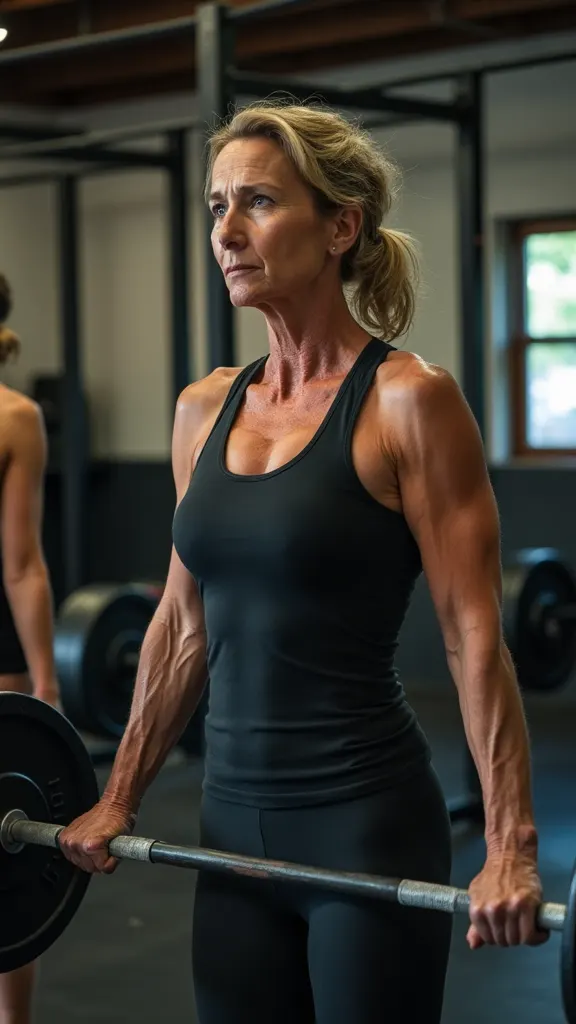
1. Strength training is the bone lever. Exercise is at the top of the NHS prevention list, and strength training in particular stresses bone in the way that tells it to remodel stronger Established: NHS. This is also where the woman in the seven-fractures story found her fix: HRT plus strength training, and the fractures stopped. You don't need to become a deadlifter, but you do need to load your bones - lifting, resistance bands, bodyweight squats that challenge you - a few times a week. (The musculoskeletal leaflet from the NHS is blunt that weaker bones are part of the menopause picture and that activity and bone-health support are the management plan Established: NHS MSK leaflet.)
2. Calcium + vitamin D, as a pair. Calcium is the raw material; vitamin D is what lets your body absorb it. The NHS prevention list includes foods rich in calcium and vitamin D plus a daily supplement containing 10 micrograms of vitamin D Established: NHS. If you're considering supplements, the D3-and-calcium pairing is the legitimate, boring, well-supported one. (Browse calcium + vitamin D3 supplements.)
3. Creatine has a modest, honest case. The peri-community darling has a plausible logic for bone and muscle maintenance as you age - more muscle supports bone, and creatine supports muscle - but the evidence in this exact demographic is early. Treat it as a support, not a protocol. (Creatine on Amazon.)
4. HRT is the conversation worth having. The NHS lists preventing osteoporosis among HRT's benefits, because it addresses the estrogen drop at its source Established: NHS. The woman in the seven-fractures story didn't fix her bones with supplements; she fixed them with HRT and strength training. Whether HRT is right for you depends on your history, your symptoms, and your risk profile - which is exactly why the conversation belongs with a clinician. (The HRT end game: how long do you actually take it?)
The order of operations matters. Supplements support the plan; they don't replace the doctor conversation, and they definitely don't replace the deadlifts.
The bottom line
The bones are the one part of perimenopause you can't feel, which is why they're the part everyone ignores until something breaks. The good news is that the fix window is now, it's cheap, and it's mostly boring: lift things, eat calcium, get your vitamin D, and have the HRT conversation.
Seven bones in a year at 42 didn't have to be the way that woman found out. You already know more than she did before her first fracture - which means you're already ahead of the ambush. Now go ask for the scan, and pick up something heavy.