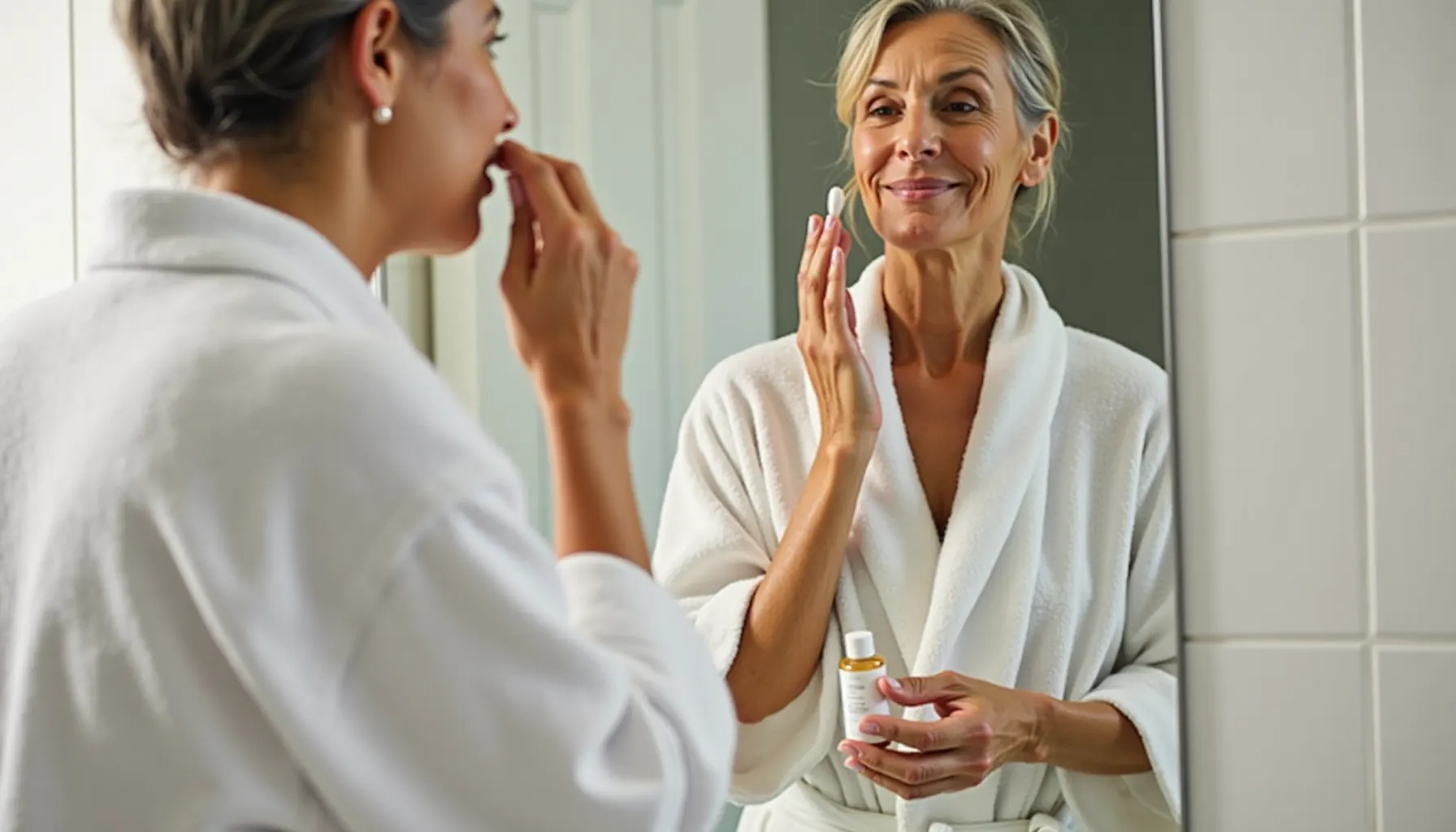
Here is the bad news first: your skin has entered the chat. Here is the good news: it's not a mystery, it's not your fault, and most of it is manageable with boring, evidence-backed basics, not a 12-step routine with a celebrity name on it.
What's actually happening
Estrogen helps keep skin hydrated, plump, and elastic. As it fluctuates and declines during perimenopause, skin changes in ways that are frustratingly visible: dryness (less natural oil), thinning (less collagen), sensitivity (easier irritation), and (the surprise guest) adult acne for some women, plus pigmentation changes for others.
This is not "aging badly." This is your skin responding to a hormone transition. The symptoms hub covers the full roster; this page is the product half of the skin chapter.
The honest rules before the products
- Sunscreen is the only anti-aging product with a mountain of evidence behind it. Everything else is secondary. Daily SPF is the single highest-value thing on this page.
- Stop stripping your skin. The harsh, "squeaky clean" products that worked at 25 are now making dryness and sensitivity worse. Gentle cleansers are not a downgrade; they're an upgrade for this phase.
- Ceramides and barrier repair are your friends. The dry, tight, easily-irritated phase is a compromised-skin-barrier phase. Barrier-repair ingredients (ceramides, niacinamide, hyaluronic acid) are the most consistently useful category for perimenopause skin.
- We did not test these products on our own faces, and we won't pretend otherwise. We're telling you what the dermatology literature supports and what patterns in real reviews show. Your skin is your skin; patch-test, start slow, and return what doesn't work.
Our recommendations
The First Move: gentle cleanser + moisturizer
- Why we picked it: Most perimenopause skin complaints (dryness, tightness, irritation) get meaningfully better when you stop over-cleansing and start moisturizing properly. A gentle, fragrance-free cleanser plus a moisturizer with ceramides or hyaluronic acid is the highest-leverage change you can make.
- What to look for: "fragrance-free" or "for sensitive skin," ceramides or hyaluronic acid in the ingredients, no physical exfoliant grit.
- Price: approximately $12–40
- Available at: Perimenopause skincare on Amazon
- What to know: This is the boring answer, and it's the right one. If you change nothing else, change this.
The Non-Negotiable: daily sunscreen
- Why we picked it: The dermatology evidence is unambiguous; daily broad-spectrum sunscreen is the most effective anti-aging intervention available, and it also protects against the pigmentation changes that become more common in this phase.
- What to look for: SPF 30+, broad-spectrum, and a formula you'll actually wear every day (that's the real test).
- Price: approximately $10–30
- Available at: Perimenopause skincare on Amazon
- What to know: "I only go outside sometimes" is not a sunscreen strategy. Every day, even in winter, even when it's cloudy.
The Upgrade: ceramide barrier cream
- Why we picked it: For the dry, tight, easily-irritated phase, a ceramide-rich barrier cream is the product category the evidence and the reviews agree on. It repairs the moisture barrier that keeps skin calm.
- What to look for: ceramides in the first half of the ingredient list, fragrance-free, rich texture if your skin is very dry.
- Price: approximately $15–50
- Available at: Perimenopause skincare on Amazon
- What to know: If your skin reacts to everything right now, this is the category to try first, not active ingredients.
What to skip
- The $200 cream with a miracle story. No cream reverses hormone-related collagen loss, and the evidence doesn't support the price tags. The boring basics outperform the celebrity jars at a fraction of the cost.
- Aggressive exfoliation. The "glow" treatments that were fine at 30 are now a fast track to irritation. If you exfoliate, go gentler than you think you need to.
- Anything that promises to "balance hormones" topically. Skincare does not balance hormones. Products that claim to are lying to you, and you deserve better than that.
The 15-second summary
| What your skin is doing | What helps | Approximate cost | Where to start | |---|---|---|---| | Dry, tight, irritated | Gentle cleanser + ceramide moisturizer | ~$12–40 | Browse skincare | | Everything is aging, apparently | Daily broad-spectrum sunscreen | ~$10–30 | Browse skincare | | Sensitive to everything | Barrier-repair cream, fragrance-free | ~$15–50 | Browse skincare | | Adult acne / pigmentation | Worth a conversation with a dermatologist | varies | Skin changes |
When this stops being a product problem
New moles, changing moles, sores that don't heal, or any skin change that worries you are never a product problem; that's a dermatologist conversation, full stop. And if acne or pigmentation is significant, a dermatologist can recommend prescription options that no over-the-counter product matches. This page is for the everyday dryness, sensitivity, and "what is happening to my face" phase, which, again, is most of us.
How we researched this
We did not test every product on our own faces, and we won't pretend otherwise. We reviewed the dermatology guidance on hormone-related skin changes, compared ingredient lists against what the evidence supports (ceramides, niacinamide, hyaluronic acid, sunscreen), and checked independent reviews for consistent patterns. Commission never influences what we recommend; see our affiliate disclosure.