The group chat has a new third rail: Alzheimer's. Not the disease itself - the test. Someone saw the survey, someone's aunt is "getting ahead of it," and someone else has forgotten a coworker's name twice today and is suddenly doing math about her own future at 11pm.
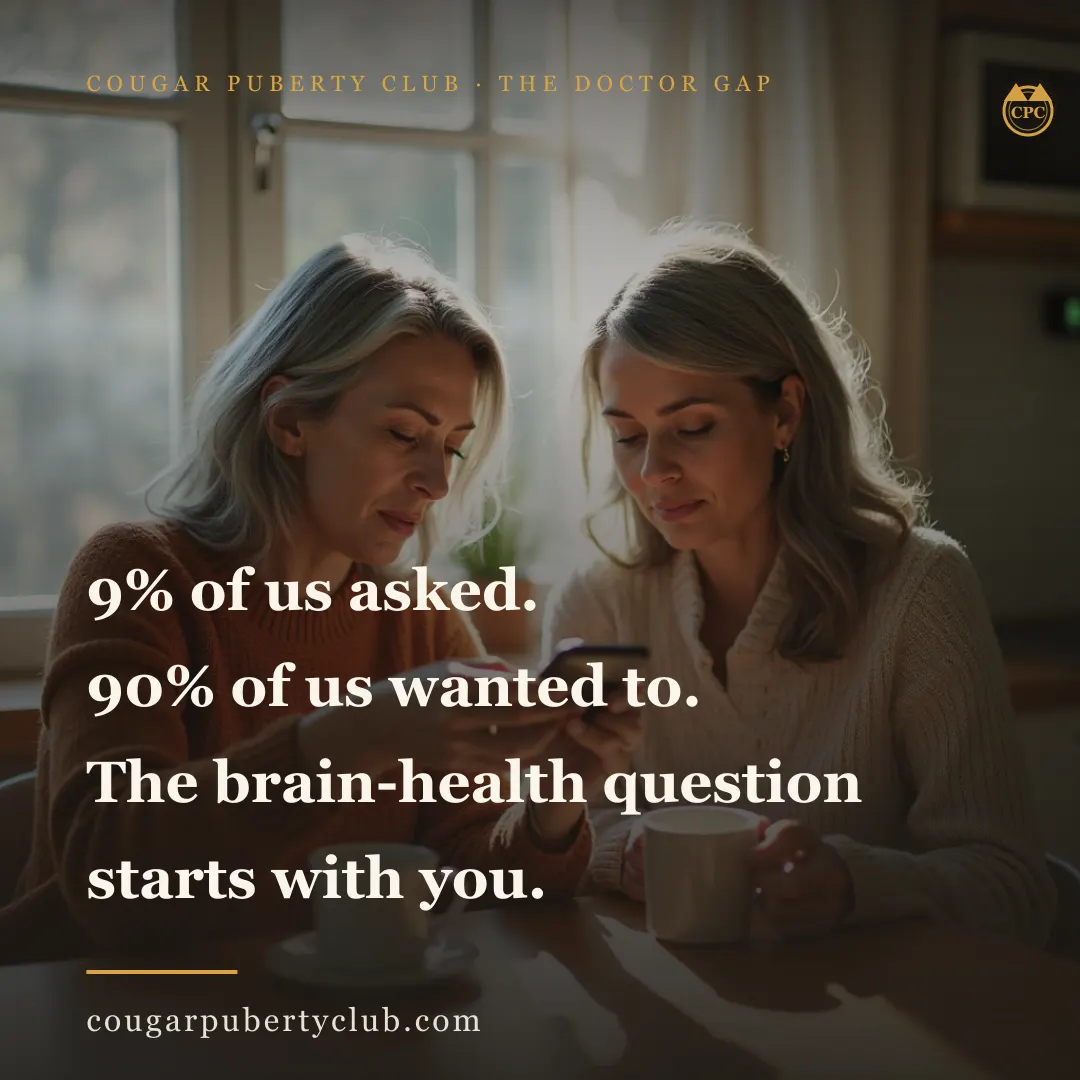
The survey is real and it's stark: 90% of women ages 45-64 say they'd be open to a simple blood test that could help diagnose Alzheimer's early - but only 9% say a healthcare provider has ever raised cognitive health with them Survey: Harris Poll for HealthyWomen, via Flow Space. Ninety. Percent. Want the conversation. Nine percent of doctors start it.
So the question lands on the patient, as these questions always do. And because it lands on us, we should know what we're actually asking for.
What the tests actually measure
The FDA cleared the first blood test used to aid in diagnosing Alzheimer's in May 2025: the Lumipulse G pTau217/β-Amyloid 1-42 Plasma Ratio Established: FDA. Two proteins, one ratio:
- pTau217 - a form of phosphorylated tau, one of the proteins that accumulates in the brain in Alzheimer's
- β-amyloid 1-42 - the other hallmark protein, the one that forms the plaques
The test measures both in your plasma and computes the ratio, which correlates with whether amyloid plaques are present in the brain. That's the whole trick: a blood draw standing in for a PET scan or a spinal tap Established: FDA. The clearance was based on a study of 499 plasma samples from adults who were already cognitively impaired.
Here's the sentence that matters more than any of the science, and it's straight from the FDA: the test is indicated for adults aged 55 and older who are exhibiting signs and symptoms of the disease Established: FDA.
Not "adults who are worried." Not "women in perimenopause who forgot a word." Adults with symptoms, aged 55 and up. The test helps a doctor evaluate someone who is already showing signs - it is not a fortune-telling machine for the worried-well, and the FDA is explicit that it doesn't diagnose Alzheimer's on its own.
The private testing market has noticed the gap between that indication and the anxiety. In the UK, The Times profiled a 39-year-old fit-and-healthy Ibiza DJ who paid for a pTau217 test herself after watching her father die of the disease - a first-person snapshot of the self-funded testing wave running ahead of medical guidance First-person: The Times. She's not the only one. Clinics are happy to sell a $300-$1,000 test to a woman in her 40s who is scared. Scared is not the same as indicated.
Who these tests are for
The honest, slightly uncomfortable summary:
The tests are for people with symptoms. If you're 58 and forgetting appointments, losing track of conversations, or repeating questions - the FDA-cleared test is a tool your doctor can use as part of a full evaluation Established: FDA.
The tests are not for the worried-well. If you're 46, healthy, and occasionally walk into a room and forget why - that's the perimenopause experience, not the FDA-cleared population. Buying a pTau217 test because you're anxious is how you get a number you don't know how to interpret, from a lab that isn't accountable for the anxiety it sells. The survey found only 13% of women were even familiar with the FDA-cleared tests before they said yes to the idea of one Survey: Flow Space - we're enthusiastic about a product most of us haven't looked at closely.
There's a middle group that deserves a real conversation, not a panic purchase. Family history changes the calculus. One in three women in the survey reported a family history of Alzheimer's or dementia Survey: Flow Space. If Alzheimer's runs in your family, that's a discussion with a clinician about risk, what's known, what's unknown, and whether testing would change anything you'd do. That conversation is legitimate. It's just a conversation, not a same-day blood draw from a clinic that found you on Instagram.
The brain-fog-vs-Alzheimer's question
Underneath every version of this question is the same fear, and we've written about it before: is this brain fog, or is this the beginning of the end?
The evidence is reassuring for most of you. Brain fog - forgetfulness, trouble concentrating, word-finding slips, walking into rooms - is one of the most commonly reported experiences of the menopause transition, tied to fluctuating hormone levels and documented structural brain changes, not early dementia Established: The Menopause Society. The full case lives in our Brain Fog explainer, including the word-slip hall of fame.
The distinction that matters clinically: brain fog is fluctuating - worse with sleep deprivation, stress, and heat; better on good weeks. Alzheimer's-type decline is progressive - steadily worse, and it interferes with daily function in ways that are hard to miss over months Established: OWH. If your memory issues are mild and wax and wane with your life, you're in the club, not the hospital. If they're getting worse and interfering with work or safety, that's a conversation - and the blood test is one tool your clinician might use in it.
And one more piece of reassurance that belongs in this conversation: the estrogen-MHT and dementia picture has been moving in a hopeful direction. A Stanford Medicine study published in Neurology (Aug 2026) found women who used estrogen-only MHT had 35% lower odds of Alzheimer's pathology and 39% lower odds of a dementia diagnosis - modest, observational, and not a reason to start or stop hormones on its own, but a genuine dent in the old "hormones cause dementia" fear Established: Stanford Medicine. We covered it in the card that flipped the dementia fear, and the deeper HRT conversation lives here: Does HRT protect against Alzheimer's?.
The script: raising it with your doctor
Nine percent of doctors bring this up. That means 91% of you are going to have to. Here's the script - short, specific, and impossible to dismiss as "another internet worry":
"I've been having more memory slips lately, and I read that there are now FDA-cleared blood tests for Alzheimer's. I know they're indicated for people 55+ with symptoms. Can we talk about whether baseline testing makes sense for me - or what else could explain what I'm experiencing?"
That's the whole move. Three things happen when you say it:
- You name the fear without making it a self-diagnosis.
- You show you know the indication - which signals you're not asking for a vending-machine test, you're asking for a medical opinion.
- You open the door to the real answer, which is often "let's rule out sleep, thyroid, medication, and stress first" - the fixable stuff that brain fog is usually made of.
If your clinician dismisses the question, that's data about the clinician, not about you. The bring-a-witness playbook covers how to get a real answer out of an appointment, and the Brain Fog explainer has the full list of clinician questions for memory complaints.
The bottom line
The tests are real, they're a genuine advance for the people they're indicated for, and the 90%-want/9%-asked gap is one more item on the list of things women have to raise themselves - right next to libido, HRT, and testosterone. But "I want to know" is not the same as "I should be tested." If you have symptoms and you're 55+, ask your doctor about it. If you're in the brain-fog years and scared, you don't need a blood test - you need the reassurance that this is the most commonly reported experience of perimenopause, and the conversation with a clinician who will actually listen.
The group chat deserves the real version of this conversation. Send them the card below.
- Brain Fog in Perimenopause: When You Forget the Word for Colander
- Does HRT Protect Against Alzheimer's? The End Game
- HRT Is Back. What Actually Changed?
- Every source behind this article
Want more of this? Join the 3 AM Club, our newsletter for people awake at weird hours wondering if forgetting a word is a sign of something. It's not. One useful thing, one surprising find, one thing that'll make you laugh. No spam, no creepy tracking.