A hundred million views of women posting their faces and asking strangers to guess how old they look. The "Guess My Age" trend - #guessmyagechallenge - is one of the biggest formats on TikTok this year, and here's the part nobody says out loud: it's not a game. It's a verdict machine, and midlife women are the raw material Press: PopSugar.
The comment sections are brutal. The verdicts whip around - the same woman guessed 43, then 70, in the same thread. The follow-up economy is transformation videos and Botox content. And the platform is in on it: the Washington Post reported TikTok actively promoting aging filters and challenges, because the youthfulness fixation is a growth metric Press: PopSugar.
We're going to talk about why this is aimed at us, what the "compliment" version is doing, and how to get out of the grading economy entirely.
The test you didn't sign up for
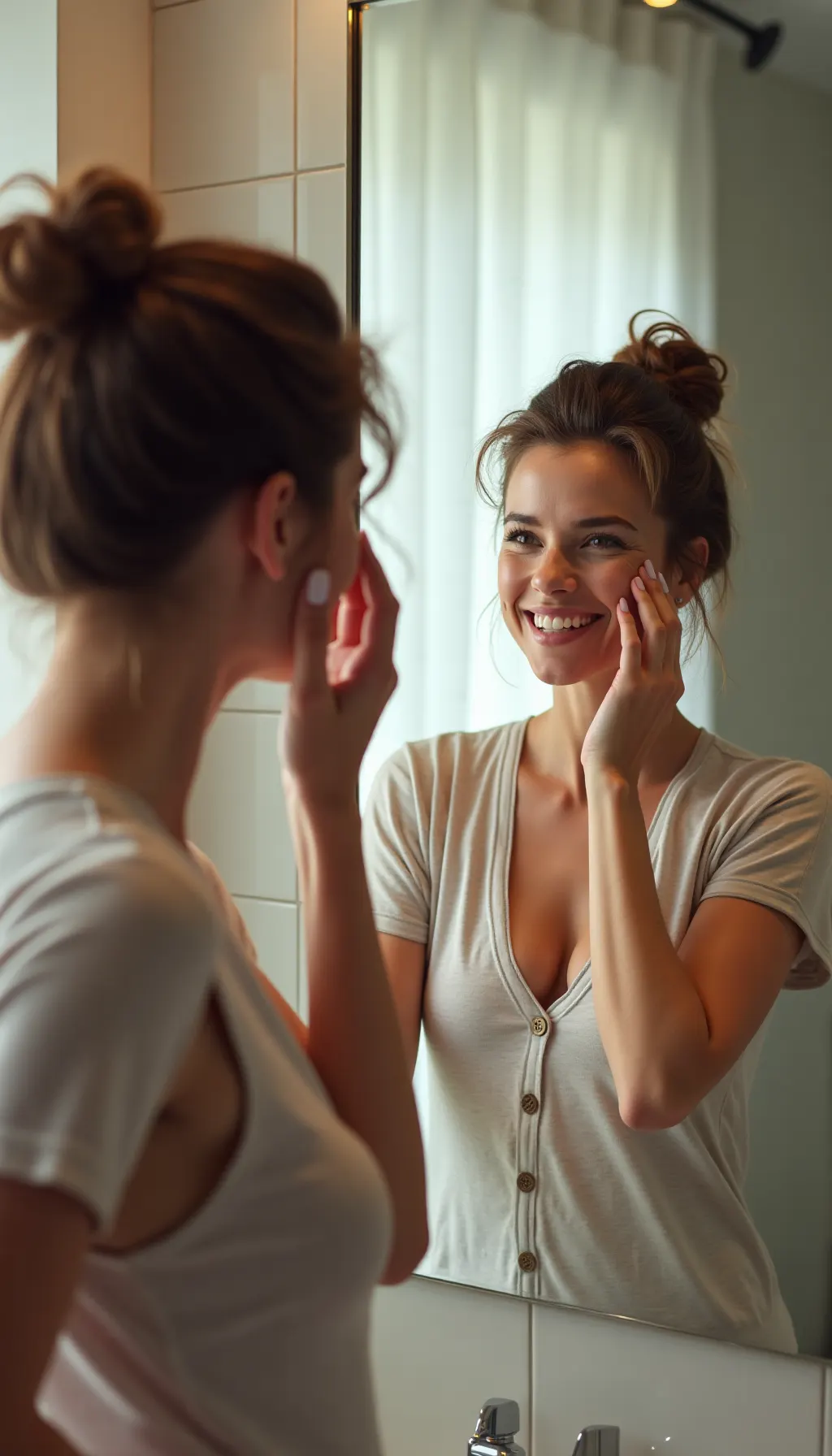
Here's the thing about the Guess My Age trend: the women in the videos are usually smiling. It looks like play. It's a filter, a countdown, a reveal. But the format has a verdict baked into it - this is how old you look - delivered by strangers with no stake in you, no context, and no consequences.
And midlife women are the target, specifically, for a reason that's not a mystery. This is the decade the evidence of aging starts arriving on a public schedule. Skin in your 40s produces less oil; collagen and elastin break down, and crepey, thin skin follows Established: Cleveland Clinic. Hair changes are common enough that the NHS keeps a dedicated page on it Established: NHS. Meanwhile the culture has spent forty years teaching everyone to read those changes as a score. Put the two together and you get the trend: the changes are visible, so the guessing is 'fun.'
It was never fun. It was a public audit of the one thing women are still told they owe the world: looking younger than they are.
The compliment that's an indictment
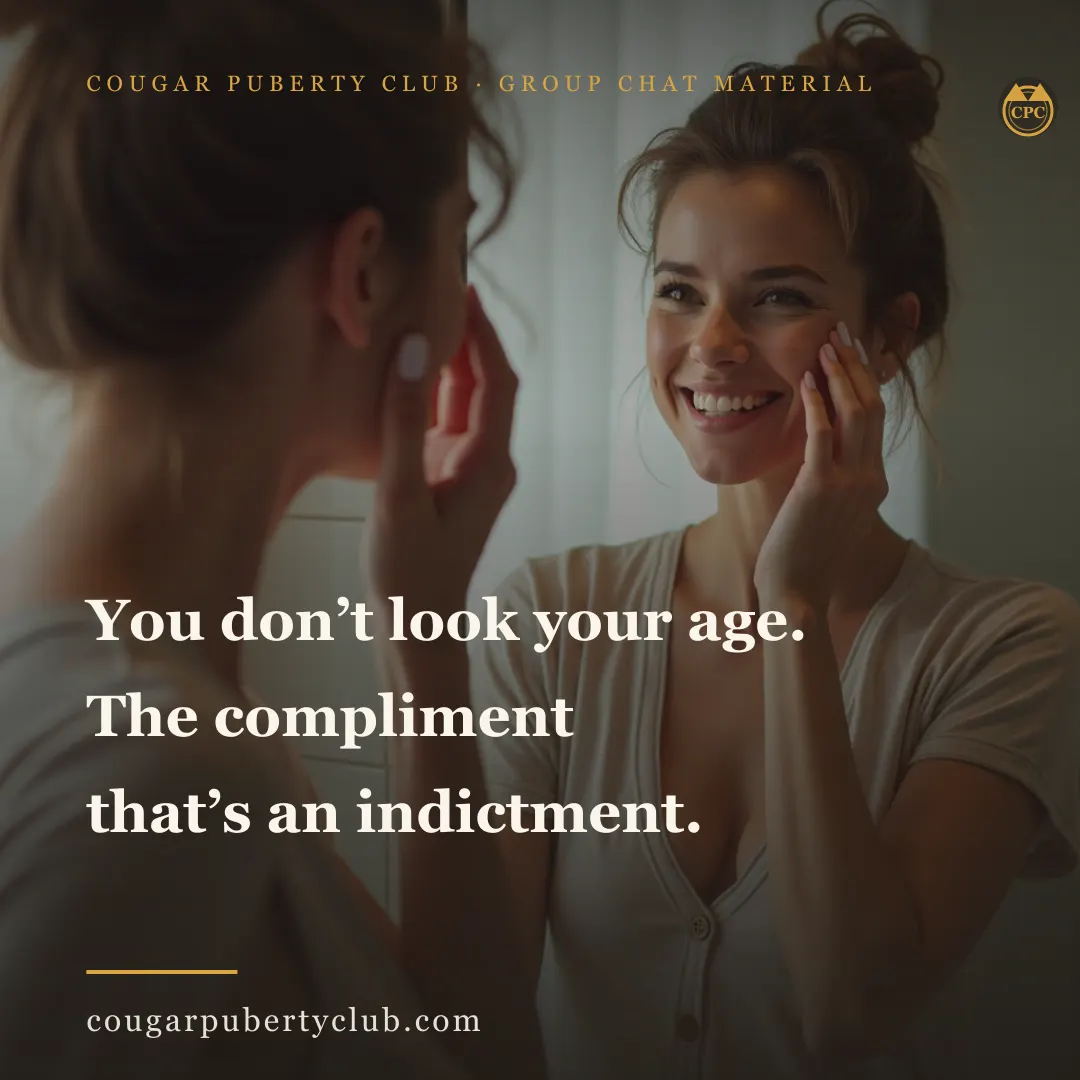
You don't even need the app. The verdict machine has a smiling, in-person version that's been running for decades: "You don't look your age." "You look great for your age."
It's meant as praise. It lands as confirmation that aging is a loss - because the sentence only works if looking your age would be the failure. The recurring r/AskWomenOver30 threads capture the whole economy in a few lines: "Young people don't know what people in their 40s actually look like" - and the dating-currency beat, women describing age concealment as relationship leverage, "if they knew my age before they saw me, they wouldn't have been interested" Community: r/AskWomenOver30.
The compliment does the exact same work as the comment section, just with better manners: it grades you against the expectation that you should look younger. Which is why it's called the backhanded compliment - the praise is the hand, the indictment is the backhand.
The response arc
The good news: the verdict machine is finally getting an answer that isn't a transformation video. In August, People ran the story of a 40-year-old woman publicly graded by internet commenters as looking "way older than 50" - and her answer, after the dust settled, wasn't Botox and it wasn't a rebuttal. It was: there's nothing shameful about aging Press: People.
That's the unbothered response, and it's a skill, not a personality trait. The women winning this are the ones who stopped submitting to the test, not the ones who got better scores.
The unbothered response script
You get a few clean moves, none of which require a speech:
- "Thank you - I am my age." For the compliment that's an indictment. Warm, true, and it declines the framing entirely.
- "What a strange thing to say out loud." For the version that's just rude. Said with genuine curiosity, it does the work for you.
- "I'm not taking that test tonight." For the party Guess My Age invitation. Add "but you look happy, which is better" if you're feeling generous.
- The eyebrow. Sometimes the entire response is the pause before you change the subject. Underrated, free, effective.
None of this is about having a comeback. It's about opting out of the grading economy - the same way the grey-hair pendulum and the body truce are about opting out of the body grading economy. The face is just the newest frontier.
Why it's aimed at us
Perimenopause is the decade the audit arrives, because the changes are visible - skin, hair, the uneven clock where your face ages on a different schedule than your body does Related: uneven aging clock. The trend noticed. The filters noticed. The platform promoted the filters Press: PopSugar.
But here's the reframe worth keeping: the verdicts aren't even real. The same face gets 43 and 70 in the same thread. The grades are vibes wearing numbers. You don't have to build your week - or your skincare routine, or your self-concept - on someone's vibes.
You're not late to this realization. The group chat already knew. Now you have the vocabulary: it's not a game, it's a verdict machine. And you're allowed to decline the test.
If you're noticing skin and hair changes and wondering what's normal, the honest starting point is the evidence: what actually changes in peri skin and when hair loss deserves a GP visit. Not because you need fixing - because knowing the physiology is how you stop treating strangers' guesses as medical opinion.