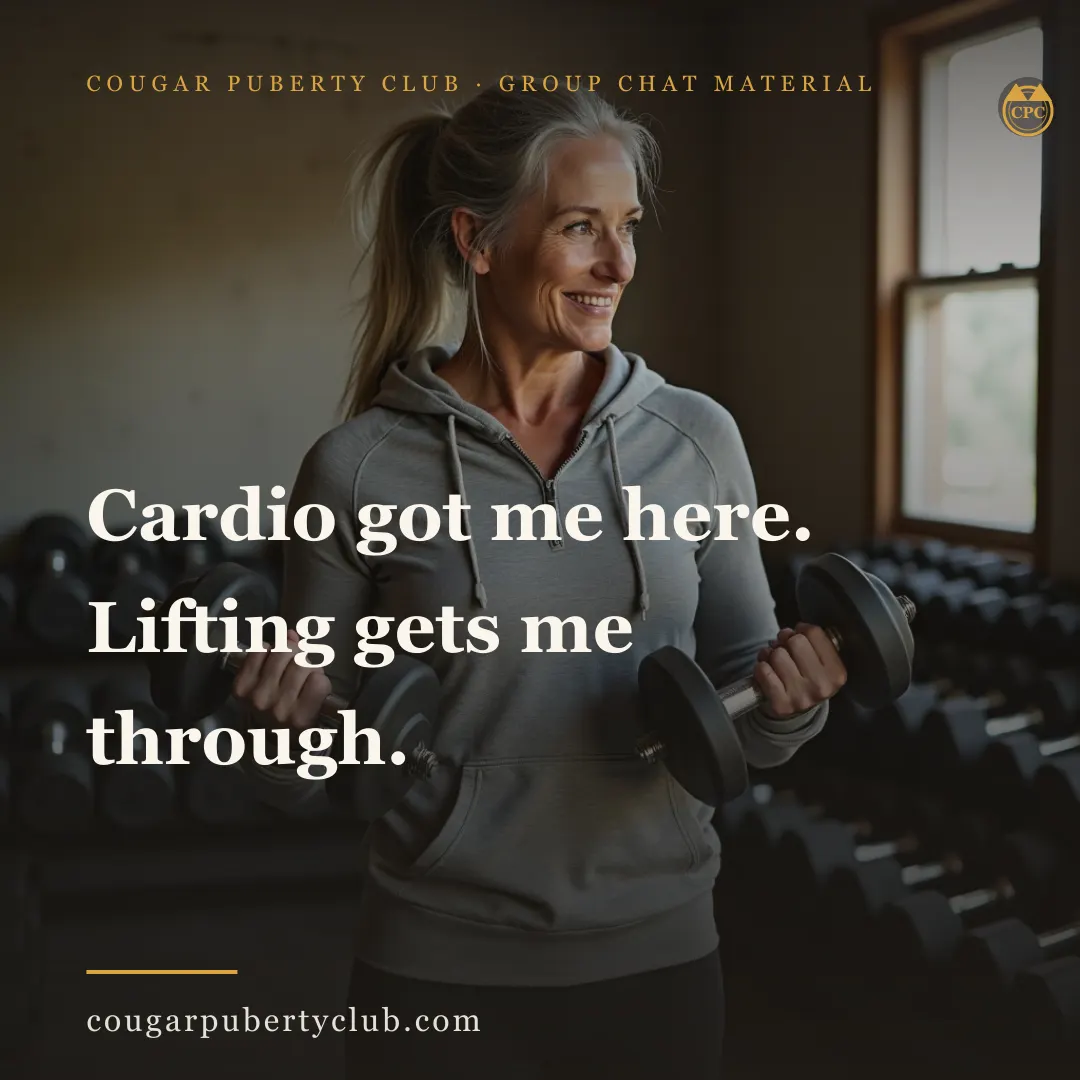
The group chat has a new civil war and it's not about the thermostat.
Half of you have spent the last twenty years in cardio classes - step aerobics, spin, the treadmill with the forearm rest - and you are good at it. You've got the endurance. You've got the playlist. You've got the leg warmers that came back into style like they never left.
And now the fitness industry, the same one that sold you those classes, has quietly changed the assignment. The 2026 trend reports put "Menopause & Women's Health" in the top ten - ACE's advisory board called it, and I quote, "it's about damn time" Reported: ACE/ACSM 2026 trend reports. The New York Times ran the headline question the group chat has been circling for months: do women really need a menopause workout? Reported: NYT, Jun 2026
The answer, delivered with the industry's full marketing budget behind it, is: strength training. Lifting. Weights. The thing you have never once done on purpose.
Welcome to the cardio-girl reckoning. It's not that your cardio lied to you. It's that perimenopause changed the exam.
<!-- GC card renders via inline_images frontmatter -->
The muscle-loss reality nobody put on the syllabus
Here's what's actually happening under the hood, minus the doom: estrogen decline shifts where fat is stored and makes muscle maintenance harder Established: Endocrine Society. Muscle loss around the transition is real enough that the NHS publishes a dedicated musculoskeletal menopause leaflet, with strength training as a core protective habit Established: NHS MSK leaflet.
And muscle isn't just the thing that makes you look toned in a tank top. It's the engine that keeps your resting metabolism honest, the armor around your joints, and the tissue that supports bone Established: NHS. When muscle leaves quietly, it takes a lot with it: strength, balance, the ability to lift the Costco box without a plan.
Cardio doesn't build that. Cardio uses it. There's a difference, and perimenopause is when the difference stops being academic.
The reckoning, kindly explained
Let's be fair to the woman in the step class: she wasn't wrong. Aerobic fitness is real, and it's good for the heart, the head, and the hot-flash tolerance. Nobody here is quitting cardio.
But here's the part that stings: for years, the fitness industry sold midlife women cardio as the answer - the calorie burner, the shrinker, the eraser of whatever we ate. Then the same industry noticed that two million US women enter perimenopause every year and the money moved Reported: NYT, Jun 2026. Suddenly the message is strength, bone health, hormone-aware programming, and the woman who has been lunging to a beat since 2004 is being told the fix is heavy things she has never touched.
It's not your fault you didn't know. Nobody taught us. The rebellion is refusing to feel stupid for the upgrade - and starting anyway.
The zero-gym-intimidation starting protocol
You do not need a gym membership, a coach, or an outfit. You need a floor, a wall, and a load that goes up over time. Here's the starter kit, in order:
1. Bodyweight (weeks 1-2). Squats - to a chair if you need the training wheels. Push-ups against a counter. Glute bridges. That's it. Two sessions a week, ten-ish reps, three rounds. The goal is not soreness; it's proving to your body that the contract is back in force.
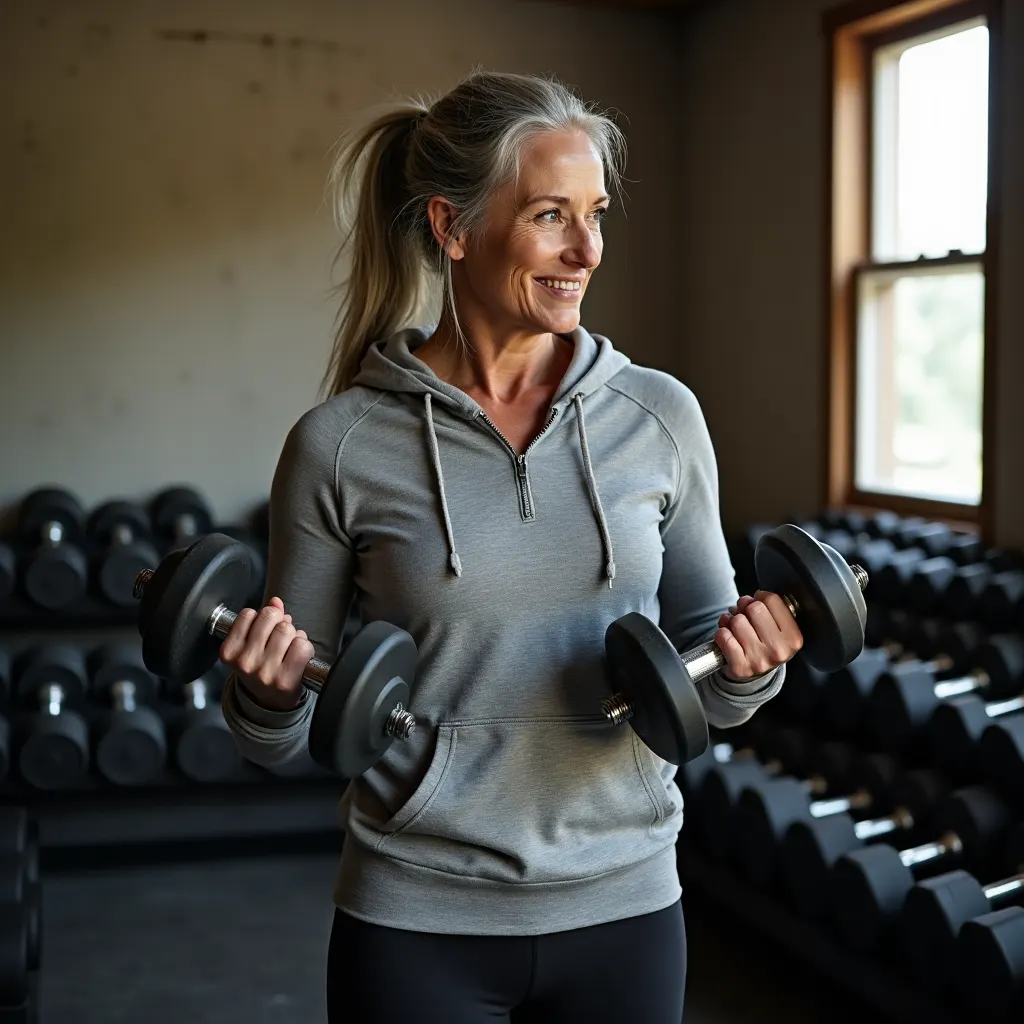
2. Add dumbbells (weeks 3-6). A pair of light dumbbells you can actually lift - not the ones that look good on Instagram. Goblet squats, overhead press, rows. Still two sessions a week. The weight should feel challenging on the last two reps, not humiliating on the first.
3. Bands for the finishers. Resistance bands are the cheapest, least-intimidating equipment on earth, and they travel. Rows, banded walks, bicep curls while you watch the news. (Resistance bands on Amazon.)
The non-negotiable: two sessions a week, minimum. Not seven. Not "when I feel motivated." Two. The single most important variable in strength training is that the load goes up over time, however slowly - consistency beats intensity, and it beats the perfect plan you never start.
The honest levers (what actually helps, and what's optional)
- Protein is the building material. If you're lifting, your body needs more than the toast-and-coffee breakfast is providing. A protein supplement is a legitimate convenience, not a cure. (Protein on Amazon.)
- Creatine has a modest, honest case for muscle maintenance in midlife women. The logic is real; the evidence in this exact demographic is early. Support, not protocol. (Creatine on Amazon.)
- The training is the habit. Everything else is garnish.
Where to go from here
This is the starter, not the finish line. When your muscles start asking for more, that's the signal to read the full argument for getting bigger on purpose in The Get-Bigger Rebellion, and to understand why the bone-density question makes strength training non-negotiable in Am I Losing Bone Density Without Knowing It?.
And if you're wondering whether the pooch is you or the estrogen: the menopause pooch has receipts.
The step class was never wasted. It got you here - fit enough, disciplined enough, and finally old enough to ask why the assignment changed. Now the assignment is heavier. Good.
Send this to the friend who's been doing cardio for twenty years and just found out.