He chews. He has always chewed. For twenty years, his chewing was background noise, the way a refrigerator hums; you genuinely did not hear it. And then one Tuesday, at dinner, you heard it. Every single crunch. Every wet slide. The sound of his jaw operating filled the room like a PA system, and something in your chest went from zero to this is a personal attack in about a second and a half.
You didn't say anything. You stared at your plate and counted to ten. You have been counting to ten at dinner for three weeks now, and you have started googling things like "why does chewing make me irrationally angry" at 11 PM, and you are worried you are becoming a horrible person.
You're not. This is a real thing with a real name, and perimenopause is very good at turning it up.
What misophonia actually is
Misophonia (literally "hatred of sound") is a decreased tolerance for specific sounds and the things you can sense related to them Established: Cleveland Clinic. The classics: chewing, throat-clearing, breathing, tapping, pen clicking, the keyboard clatter of a coworker who types like they're mad at the computer.
The key detail: it's not that the sound is loud. It's that the sound triggers something (rage, anxiety, disgust) that is wildly out of proportion to a fork scraping a plate. The reaction is physical. It hijacks you. Cleveland Clinic notes that while misophonia doesn't yet have official recognition as its own disorder, experts recognize it, and there's now a formal consensus definition used for research, diagnosis, and treatment Established: Cleveland Clinic.
Translation: this isn't you being dramatic. It's a studied condition with a growing research base, and it picked a very inconvenient time to show up.
Why perimenopause turns the dial up
Here's where we have to be honest with you, because you deserve better than a wellness-blog certainty sandwich: the direct research on perimenopause-specific misophonia is still early. But the pieces we do have line up. That is the standard the editorial desk holds every article here to: each claim resolves to a real, cited source, or we say it does not.
First: the menopause transition genuinely changes sensory processing. The National Sensory Network (an NHS England project) describes how hormone shifts during perimenopause and menopause can exacerbate sensory processing differences and introduce new sensory challenges, including changes in how women perceive and respond to sensory stimuli Emerging: National Sensory Network.
Second: your tolerance account is already running low. The mood changes of perimenopause (the irritability, the shortened fuse, the zero tolerance for discomfort) are fueled by erratic estrogen swings, sleep disruption, and the general audacity of the 3 AM wake-up. Sound rage is not a separate, special brokenness. It's the same shrinking patience account, expressing itself through your ears.
And third: the fear that you're becoming a different, worse person is itself a perimenopause classic. It's the competent-woman paradox wearing a dinner-table costume: you can run a department, but a man chewing a carrot can undo you. That gap (between who you are and how you react) is exactly why this feels like a character flaw. It isn't. It's a nervous system under load.
The chewing rage in the wild
If you've been on the internet at all, you've met your people. There's the viral advice from a husband to other husbands (stop chewing your food, just swallow it whole, "but I might choke and die," good, even better), which circulates because every woman within earshot of it has felt exactly that, at least for one terrible, beautiful second.
There's the woman in a perimenopause thread who chews a popsicle stick while driving to keep herself from screaming at the sound of her own family. There's the phrase that keeps showing up in comment sections, almost verbatim, from women who have never met: I think I'm becoming a horrible person.
That sentence is the actual symptom. And the answer to it is the same every time: you're not. Misophonia is not moral. It's neurological: a conditioned emotional response wired into your nervous system, amplified by hormone shifts, sleep debt, and stress Established: Cleveland Clinic. You did not choose it, and it is not a verdict on your character.
What actually helps
You can't un-hear the chewing, but you can stop letting it run your nervous system:
- Name it. "I have misophonia, it's worse in perimenopause, and this is not a moral failing" is genuinely regulating. The mechanism loses power when it has a name.
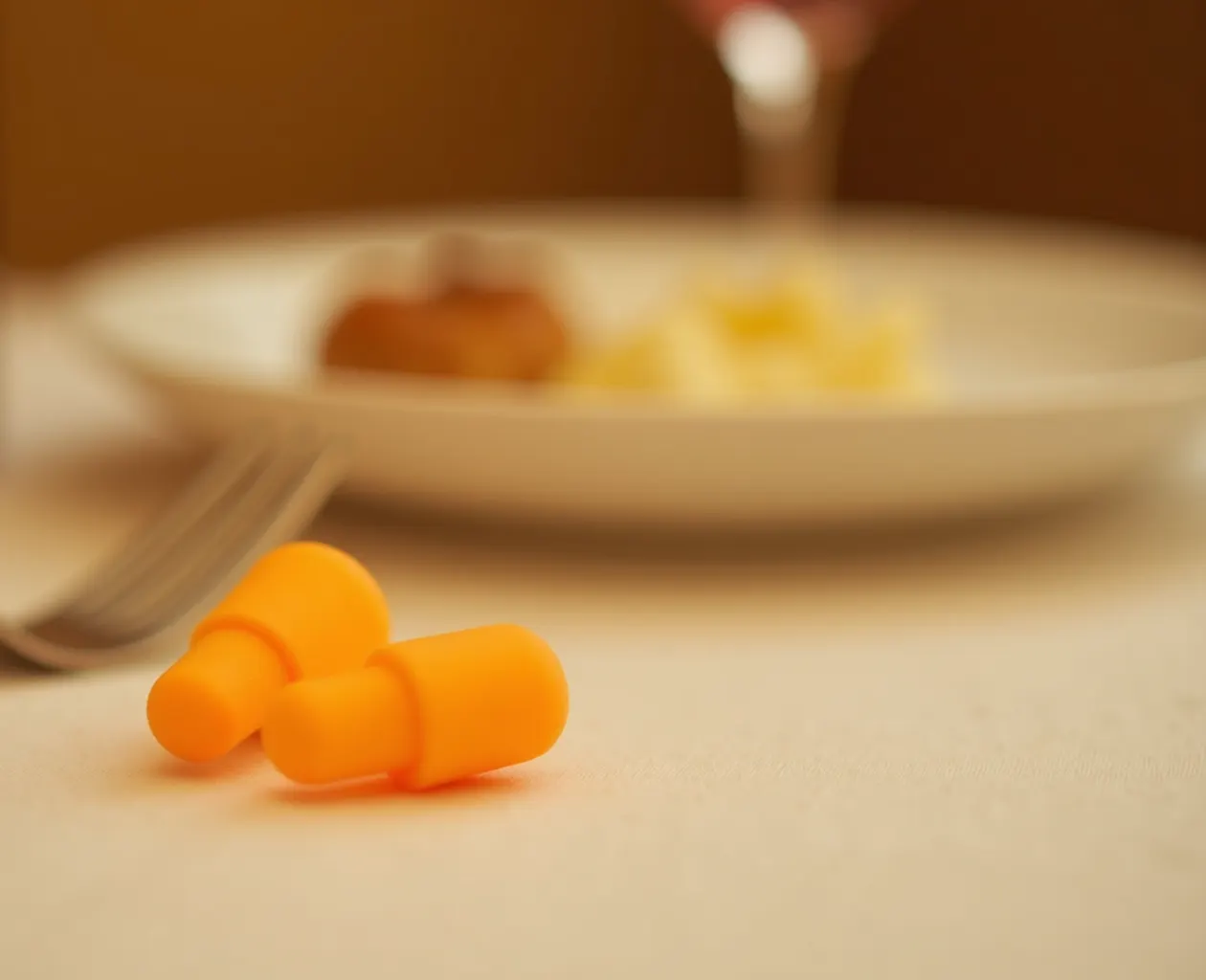
- Reduce the sound, without guilt. Earplugs at dinner are not a declaration of war; they're the same as putting on sunglasses in a bright room. If foam earplugs feel like too much, music or the TV at a reasonable volume does the same job. You're allowed to engineer your own comfort. (This is one of the few places we won't recommend a specific product; the fix here is a $3 bag of earplugs and a conversation, not a purchase.)
- Change the seating, not the marriage. If his chewing is the trigger, you don't need him to stop eating. You need to not be seated directly across from the sound. Sit diagonally. Put the dog between you. Whatever it takes.
- Use the script. "It's not you, it's my nervous system; perimenopause turned my hearing up and I need [earplugs / music / to eat in the kitchen for a bit]." Women who use this script report the conversation going shockingly well, because it names the mechanism instead of the person.
- Pay the sleep debt. The sound rage and the sleep disruption feed each other. A well-rested nervous system still notices the chewing. It just doesn't file it under crimes against humanity.
- Send it to the group chat. You are not the only one counting to ten at dinner. That's not a consolation; it's the treatment.
His chewing → Was: background noise, never noticed it. Now: a personal attack in surround sound. You have become the rage emoji with a fork.
When it deserves a clinician call
Sound rage on its own, especially when you can trace it to the transition, is something to manage, not something to fear. But there are lines worth a real conversation with a clinician:
- The rage is accompanied by a persistently low mood: most days, most of the time, for two weeks or more
- The anger feels uncontrollable, or you're worried you might lash out verbally or physically
- It's damaging your relationships or your family is walking on eggshells
- You're avoiding meals, family events, or work situations because of sounds
- The sensitivity came on suddenly alongside hearing changes, ringing, or ear pain: that combination deserves an actual ear check, not a self-diagnosis
Perimenopause rage and depression can overlap, and both are treatable. The mood changes article has the fuller red-flag list, with the same honesty and the same bottom line: red flags are not character notes, they're invitations to get taken seriously.
The bottom line
Perimenopause is the season where your body changes the terms of service on things you never thought to read the fine print on: your periods, your sleep, your tolerance for warmth, your tolerance for your husband's chewing. The chewing one is real, it has a name, and it is not you becoming a horrible person.
The rage is a signal. It's your nervous system saying the account is overdrawn and the sound is the final withdrawal. So name it, engineer your comfort, sleep, and hand the man a napkin, not because he's guilty, but because you deserve dinner without counting to ten.
Related: Mood changes in perimenopause · Brain fog in perimenopause · Perimenopause symptoms: the complete list