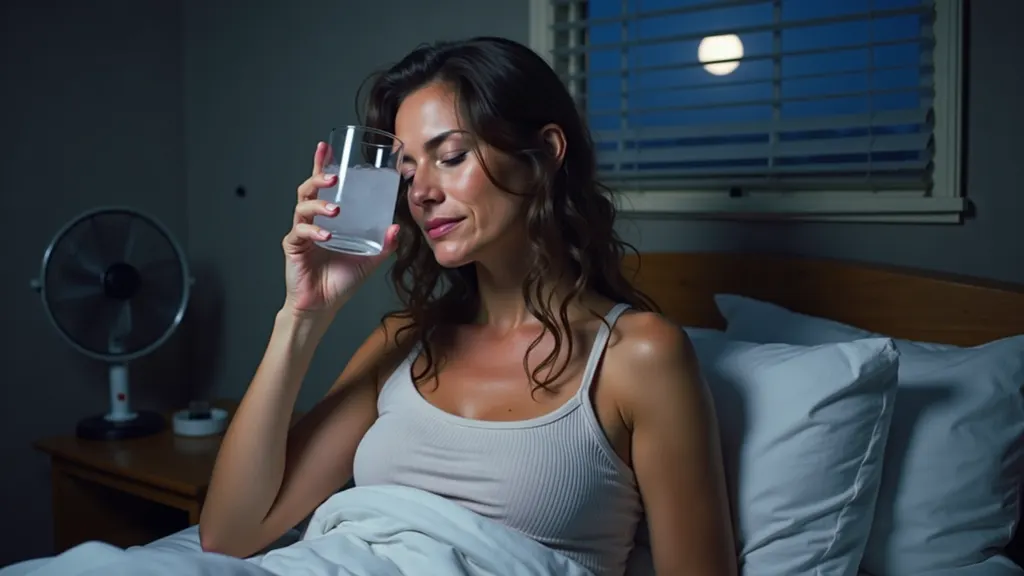
The scene is familiar to approximately every woman in perimenopause with a partner: it is 68 degrees in the bedroom. You are wearing a tank top, one leg is out of the covers, and a small fan is aimed at your face like a life-support device. Across the bed, your partner is under a duvet in pajamas, possibly a sweatshirt, radiating the serene comfort of someone whose internal thermostat still works.
This is the thermostat war. It is real. It is normal. And it is not the hill your relationship should die on.
Why this is happening
Here's the part that matters: you are not being dramatic, and they are not being difficult. Hot flashes and night sweats are one of the most common perimenopause experiences; The Menopause Society cites up to 80 percent of women in the transition Established: The Menopause Society. Your body's temperature regulation is genuinely different right now. Theirs isn't. You are both responding correctly to different internal thermostats.
The cougar puberty starter pack includes: a tiny fan, the 3:17 a.m. wake-up, one leg out of the covers, and thermostat hostage negotiations. This is not a flaw in your relationship. It is a feature of the transition; the 3 a.m. starter pack documents the full inventory.
The 3 a.m. configuration (and how to share a bed)
The 3 a.m. wake-up is where most thermostat wars actually get fought, not over the dial, but over the covers. One person is soaked and throwing off the duvet; the other is reclaiming it in their sleep. Nobody is winning.
What actually helps, based on what real couples report working:
- Separate the climate, not the bed. You do not need separate bedrooms. You need separate layers. A lighter blanket on your side, a heavier one on theirs. This is not a statement about your relationship; it's a statement about your body's current relationship with temperature.
- The fan is a peace treaty, not an escalation. A small bedside fan aimed at your face cools you without freezing them. It's the single most effective de-escalation tool in the war. (Our portable fans guide has the quiet options that don't sound like a helicopter.)
- One leg out of the covers. The international symbol of perimenopause. It's the body's own cooling system; it works regardless of what the thermostat says.
- Sheet diplomacy. Cooling sheets or breathable percale help you without requiring your partner to sleep on a glacier. Our cooling sheets guide breaks down which fabrics actually work.
The thermostat itself
Here's the negotiation framework that actually works: the thermostat gets set for the person who can't put on more layers. You cannot take off more than a tank top. Your partner can add a sweatshirt. That's the whole argument, and it's a good one: the person with fewer layer options wins the dial.
If that's not enough: the cool bedroom guide covers the full environment setup, and it was written by people who have definitely had this exact argument.
When it's not about the thermostat
Real talk: sometimes the thermostat war is not about the thermostat. Perimenopause brings mood changes, sleep disruption, and a declining tolerance for nonsense, and sometimes the thing you're actually furious about at 3 a.m. is not the blanket. That's worth noticing, not dismissing.
And here's the other side of the coin: your partner is not the enemy. The enemy is a body that changed its terms of service without notice. The person next to you is on your team; they just don't run as hot as you do right now. Treating the thermostat war as a shared problem to solve (rather than a crime to assign blame for) is what actually gets you both back to sleep.
The short version
The thermostat war is one of the most common, most normal, most shared experiences of perimenopause, which is exactly why it's also one of the most sendable. It's not a sign your relationship is broken. It's a sign your body is doing the transition. Separate the layers, aim the fan at yourself, let the person with fewer clothing options win the dial, and laugh about it when you can, because it is genuinely, painfully funny from the outside.
When the heat is truly disruptive (soaking sheets every night, waking multiple times, symptoms that worry you), that's a conversation for a clinician, not a thermostat. The night sweats article covers which signs deserve an assessment. But for the everyday version? Layers, fan, and the knowledge that half the women in your demographic are having the exact same argument tonight.