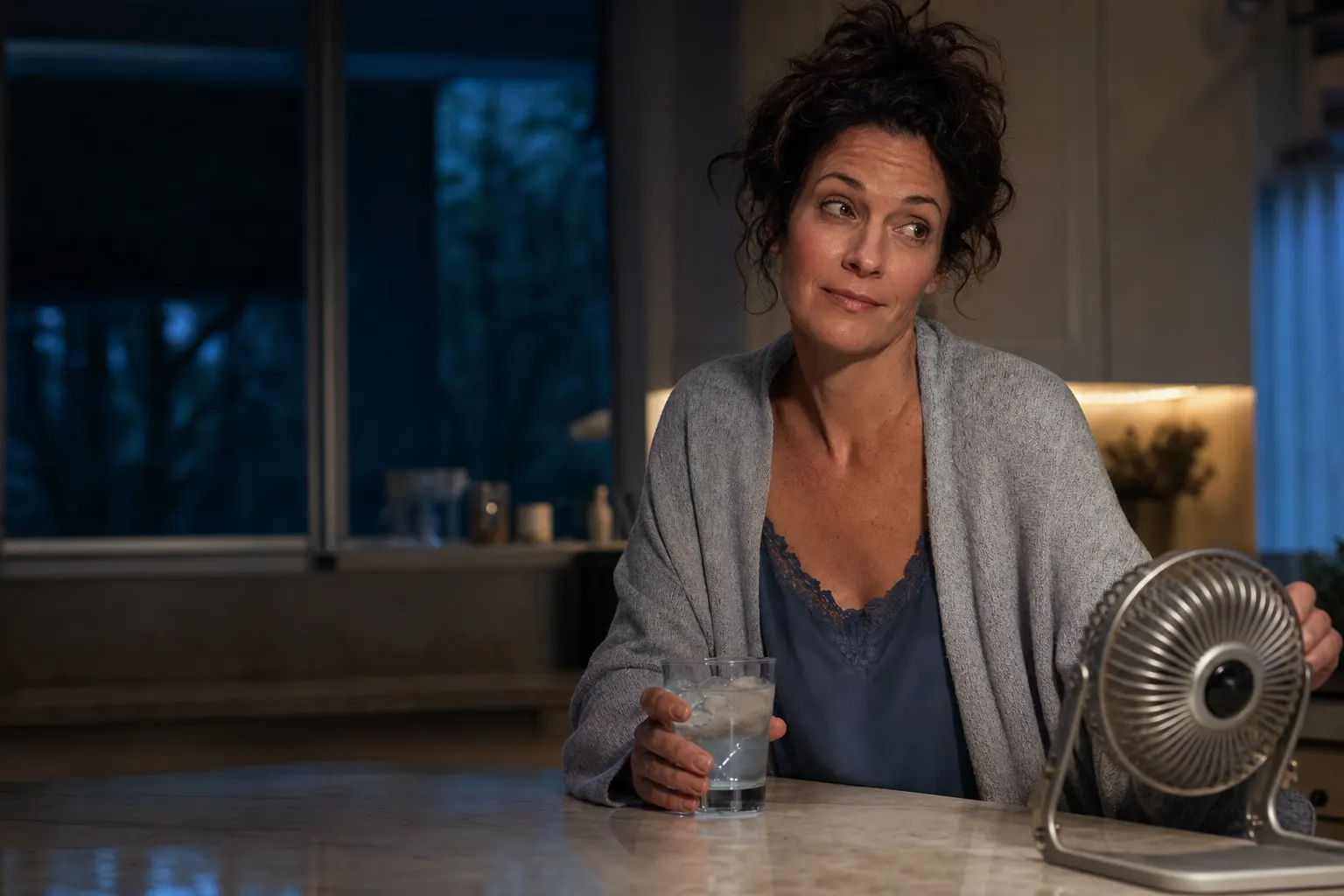
The scene: it is 3:17 a.m. You are awake. You are not sure why, but you are absolutely sure about one thing: you are too hot, your partner is somehow still asleep, and you have now checked the phone, which was a mistake, because now your brain is drafting a to-do list for a meeting that is nine hours away.
We have already established that this is a very normal perimenopause experience, and what night sweats actually are if you want the full medical picture. This page is the other half of the 3 a.m. story: the shopping list. Because at 3:17 a.m., you are not shopping for wellness. You are shopping for a way to get back to sleep.
Here is the honest version: no product fixes a hormone transition, and anyone who tells you otherwise is selling something. But the right small things make the 3 a.m. wake-up shorter, cooler, and less ridiculous. We researched the category the same way we research everything: materials, specs, independent reviews, return policies, and patterns in what real hot sleepers actually report. Here's what earns a place on the list.
The First Thing to Buy: a small fan
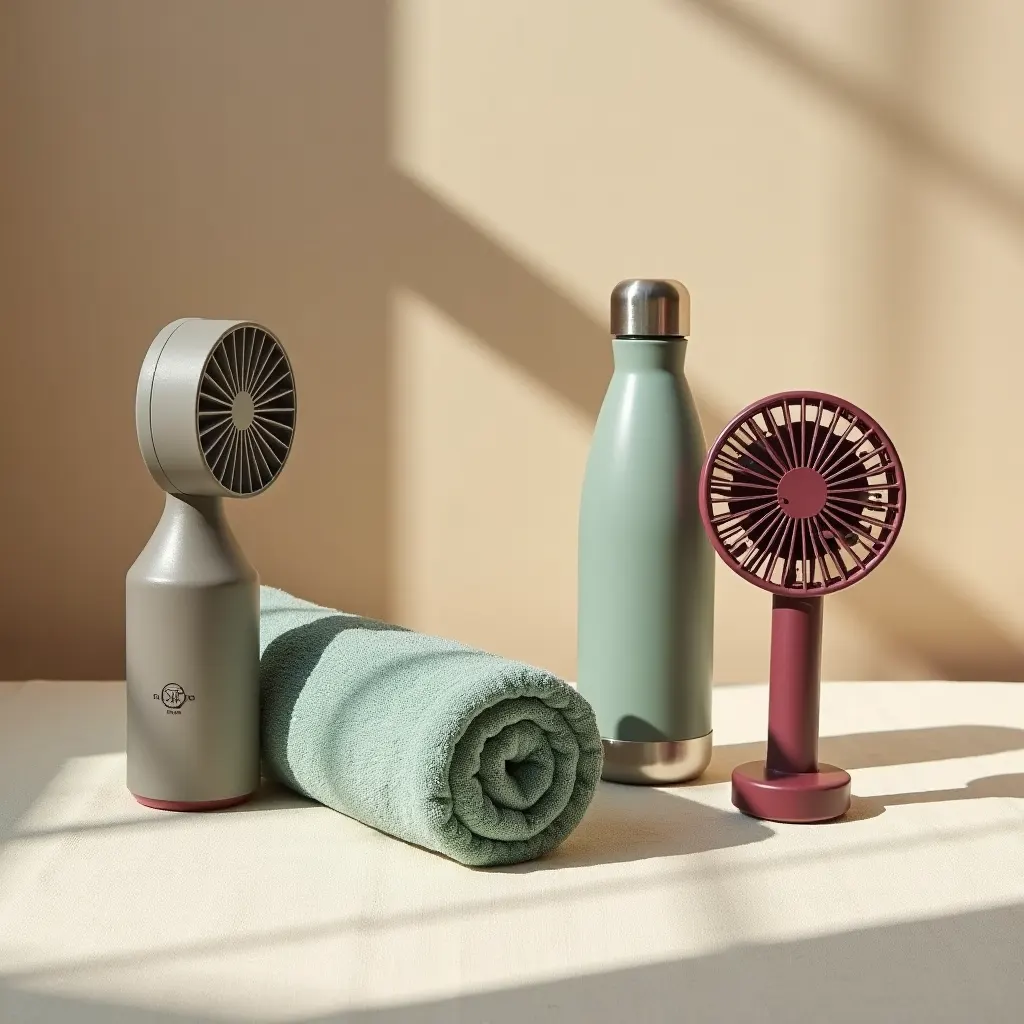
If you buy exactly one thing from this page, make it this. A small portable or bedside fan is the cheapest, fastest, lowest-commitment intervention for the 3 a.m. hot wake-up that exists. It is also the most complained-about item by sleeping partners, which means it is doing its job.
We are not going to pretend we lab-tested fans in a sleep clinic. We are going to tell you what the consistent pattern in thousands of real reviews is: a small fan aimed at the face and upper body, combined with one leg out of the covers, gets a meaningful share of people back to sleep faster than any single sheet or pajama purchase.
What to look for: something quiet (you are not trying to create white noise, you are trying to sleep), adjustable enough to aim at your face, and small enough to not dominate the nightstand. The purse-size fans have their place (see the starter pack) but for 3 a.m., a slightly larger bedside fan wins.
- Browse portable and bedside fans on Amazon, look for "quiet" and "adjustable" in the reviews, not the marketing copy.
The Bed Upgrade: cooling sheets
Sheets are the second most-searched fix, and for good reason: if you are waking up soaked, the fabric touching your skin is doing you no favors. We have a full cooling sheets guide with the materials science and the comparisons. The short version:
- Material weave matters more than thread count. Percale cotton breathes better than sateen. Synthetics like lyocell and bamboo-derived rayon generally regulate temperature better than standard cotton.
- "Cooling" is a marketing term, not a regulated claim. Look at what the fabric actually is, and check return policies: night sweats are personal, and what works for one hot sleeper won't work for another.
- The 365-night trial is the real feature. The single most useful thing Brooklinen sells might be the return policy: a full year to find out if percale actually helps you sleep cooler.
- Brooklinen percale sheet set, the "best overall" pick in our full guide
- Cooling sheets on Amazon, budget-friendly starting points (Mellanni and similar, ~$30)
- Cozy Earth bamboo sheets, the splurge option, if you want the one that actually feels cool
The Pajama Fix: moisture-wicking sleepwear
Here's the thing nobody warns you about: cotton pajamas hold the sweat against your skin and then get cold. That is why you end up shivering in a soaked shirt at 3:30 a.m.; the sheets are only half the equation.
Moisture-wicking sleepwear is the category that actually understands the assignment: it pulls sweat away from your skin so it can evaporate instead of pooling. Cool-jams built their entire business on this for people who sleep hot, and the reviews bear it out. Our full pajama guide has the details, including the honest note that some people find wicking fabrics less cozy than cotton; the tradeoff is real.
- Cool-jams sleepwear, purpose-built for night sweats
- Cooling pajamas on Amazon, more options across price points
What's not on the list
- Miracle cures. Anything claiming to "cure" night sweats or "balance hormones" in a bottle is not on this list, and we would not link to it. Night sweats are a common perimenopause experience, and treatments exist, but that is a conversation for you and a clinician, not a shopping page.
- $300 bedding as a first step. The fan comes first. If you want to test whether sheets matter to you, start with a ~$30 set and a generous return policy before you commit to premium bedding.
- Anything that requires you to believe in it. If a product needs a paragraph of mystical language to explain how it works, skip it.
The 15-second summary
| Problem | What helps | Approximate cost | Where to start | |---|---|---|---| | Waking up hot at 3 a.m. | Small portable/bedside fan | ~$15–40 | Browse fans | | Waking up soaked | Breathable percale or wicking sheets | ~$30–170 | Cooling sheets guide | | Pajamas stuck to skin | Moisture-wicking sleepwear | ~$30–60 | Cool-jams | | Room too warm | Cooler bedroom setup | varies | Cool bedroom guide |
When this stops being a shopping problem
If night sweats are soaking your bedding consistently, wake you multiple times a night, or come with fever, chills, or weight loss, that is not a shopping problem, and you should talk to a clinician. The night sweats article covers exactly which signs deserve an assessment. The shopping list is for the 3 a.m. wake-up that is annoying but otherwise fine. There is a difference, and it matters.
How we researched this
We did not purchase and test every item ourselves, and we won't pretend otherwise. We compared manufacturer-published specifications, checked independent reviews for consistent patterns (not individual outliers), verified return policies and price ranges, and cross-referenced recommendations with the sleep guidance we cite in our medical content. Every linked product was selected through this process. Commission never influences what we recommend; see our affiliate disclosure.