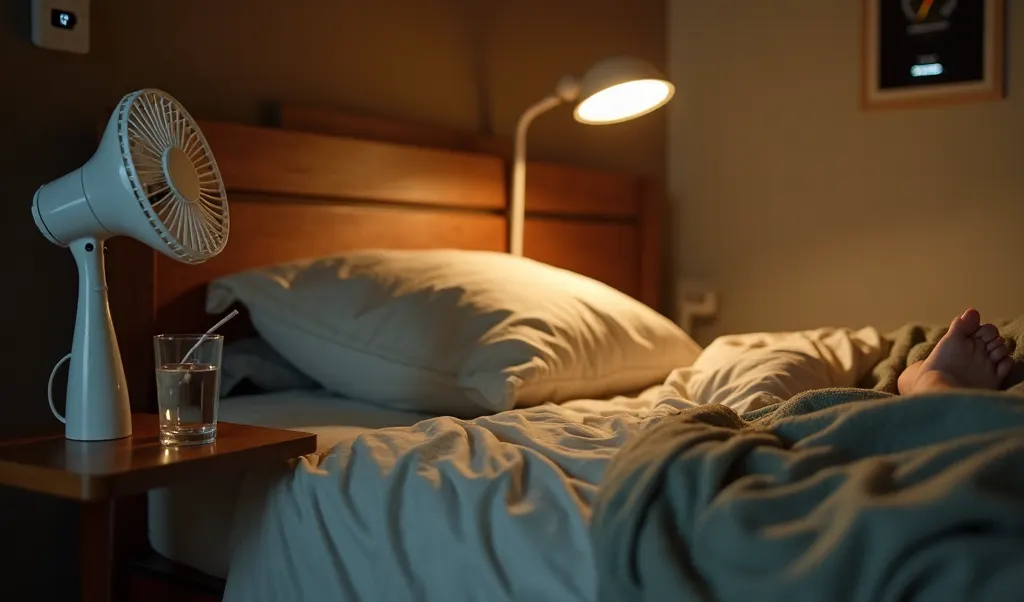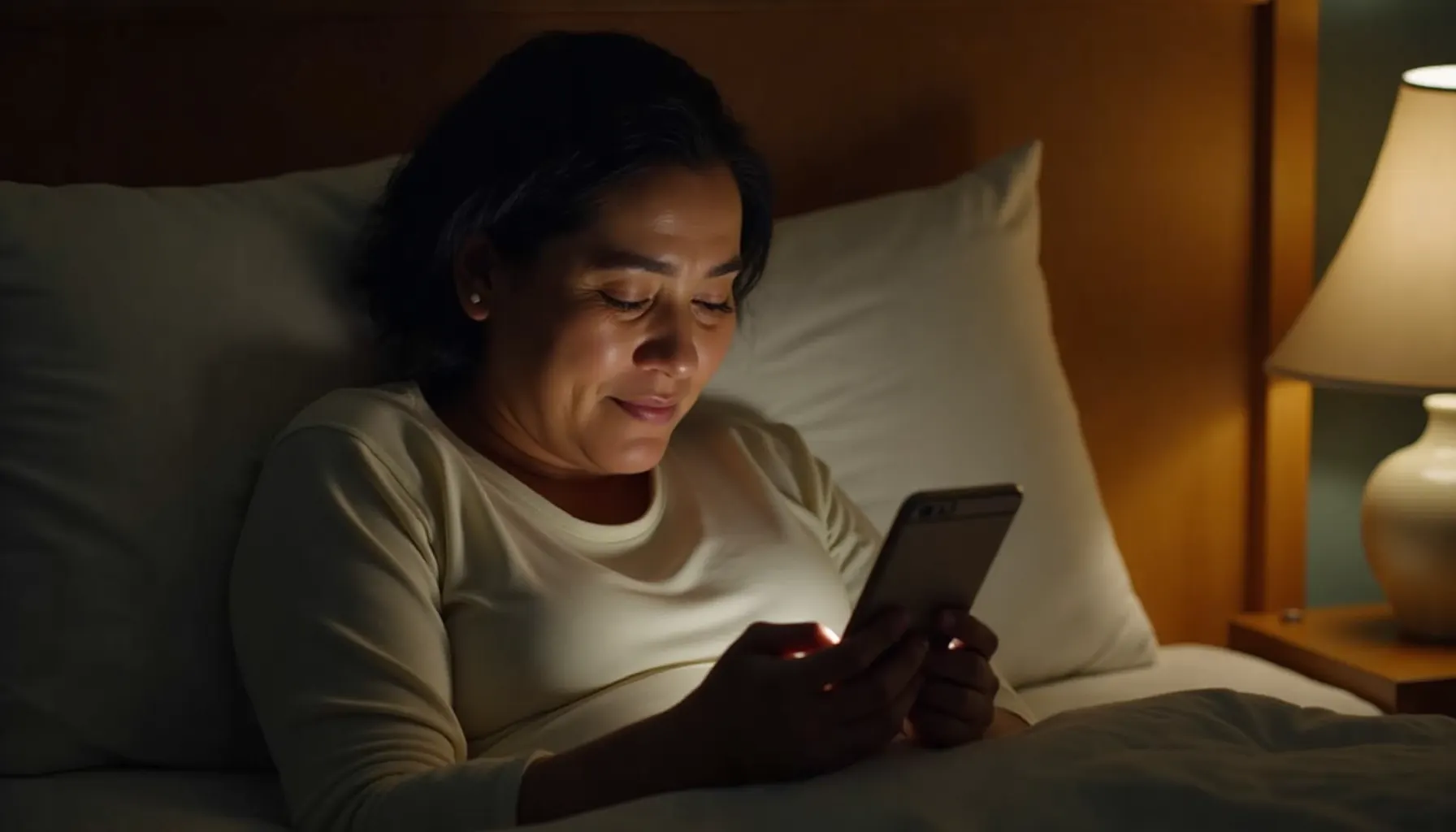
The 3 a.m. wake-up is the signature move of cougar puberty. You fall asleep fine, and then you're awake, hot or not, brain fully online, partner untouched by any of this, and the phone is right there, glowing with all the reasons to stay awake.
The 3 AM Starter Pack covers the full inventory of the experience. This guide is the fix kit: the environment layer that gets you back to sleep. Because once you've handled the heat (fan, sheets, pajamas, pillow), the next thing keeping you awake is usually the room itself: the light, the noise, the sense that the world is happening while you're trying to sleep.
The honest framing: no product fixes the hormone-driven wake-up. But the environment determines whether a 3 a.m. wake-up is a 10-minute blip or a 2-hour spiral. That difference is worth a lot.
The three layers of the fix kit
Layer 1: Light. Light is the strongest signal your brain has for "it's morning." If any light reaches your eyes at 3 a.m. (streetlight, phone notification, the LED on the charger), your brain starts treating it as day. A good eye mask or blackout curtains close that loophole. This is the cheapest, most underrated layer.
Layer 2: Noise. At 3 a.m., every sound is louder: the partner's breathing, the dog shifting, the car outside, the refrigerator making its opinion known. White noise (a machine, a fan, or an app) creates a consistent sound blanket that makes those interruptions less jarring.
Layer 3: The brain. The phone is the enemy at 3 a.m.: the light, the content, the decision-making. The fix isn't a product so much as a rule: the phone stays across the room, and the 3 a.m. scroll is replaced by something boring. (The products in this kit make that easier; the discipline is yours.)
What to look for
Eye masks: Contoured masks (with space for your eyes) are dramatically more comfortable than flat ones, no pressure on lashes or lids. Silk or soft fabric matters if you're a side sleeper. Adjustable strap is worth paying for.
White noise: Real white-noise machines are fine; apps are fine too. What matters is consistency: the same sound every night. Some people prefer "brown noise" or fan sounds to true white noise; that's personal, and any of them work.
Blackout curtains: The cheap ones let light bleed around the edges. Look for real blackout lining and a width that covers the whole window with overlap. Room-darkening ≠ blackout; read the specs.
Earplugs: If noise is your problem, earplugs work, but they're a personal fit item, and the silicone/moldable kind tends to beat foam for comfort. Try a small pack before committing to a bulk box.
Our recommendations
For the Light: Contoured eye mask
- Why we picked it: The single cheapest, most underrated fix for the 3 a.m. wake-up. A contoured mask blocks the light that tells your brain it's morning, and the reviews from shift workers and 3 a.m. wakers are uniformly "why did I wait so long."
- What to look for: contoured (not flat), soft fabric, adjustable strap.
- Price: approximately $10–25
- Available at: Sleep products on Amazon
- What to know: Buy one and test it for a week before assuming it won't work for you. Most people who return them never gave the adjustment period a chance.
For the Noise: White noise machine
- Why we picked it: The consistent sound blanket is the difference between "heard the dog, now I'm up" and "slept through it." A dedicated machine is set-and-forget; an app works too. The feature that matters is consistency.
- What to look for: real white/pink/brown noise (not just nature sounds), volume control, no bright LEDs.
- Price: approximately $20–50
- Available at: Sleep products on Amazon
- What to know: If you already have a fan running for the heat, that may be enough white noise: test that before buying. If you need more, this is the layer.
For the World: Blackout curtains
- Why we picked it: The room-level fix. If your bedroom faces a streetlight or the sun rises into your window at 5 a.m., no mask is a substitute for actual darkness. Real blackout lining makes the room genuinely dark.
- What to look for: true blackout lining, width covering the window plus overlap, light-blocking edges.
- Price: approximately $25–60
- Available at: Sleep products on Amazon
- What to know: Measure twice. The single biggest review complaint is "didn't cover my window."
What to skip
- Melatonin gummies marketed to "women in transition." Melatonin is a real supplement with real effects, but it's not a sleep-environment product and it's not a perimenopause fix, and it's easy to misuse. If you're considering it, that's a pharmacist/clinician conversation, not a shopping decision.
- $150 "sleep tech" wearables that promise to optimize your sleep stages. The 3 a.m. problem is environmental; a gadget that scores your sleep doesn't get you back to sleep.
- Anything promising to "fix" perimenopause sleep. The wake-up is part of the transition for many women. The fix kit shortens the wake-up; it doesn't end the transition. Persistent, disruptive sleep issues deserve a clinician conversation; see our sleep troubleshooting guide.
The 15-second summary
| The problem at 3 a.m. | What helps | Approximate cost | Where to start | |---|---|---|---| | Light telling your brain it's morning | Contoured eye mask / blackout curtains | ~$10–60 | Browse sleep products | | Every sound is louder | White noise machine (or app) | ~$20–50 | Browse sleep products | | Room not actually dark | Blackout curtains | ~$25–60 | Browse sleep products | | The phone is the enemy | Phone across the room + boring backup activity | free | The discipline is yours |
How this fits the whole setup
The fix kit is the environment layer of the 3 a.m. problem: the fan handles the air, the sheets and pillow handle the bed, the pajamas handle the skin, and this kit handles the room. Together they turn a 3 a.m. wake-up from a 2-hour event into a 10-minute blip. If the environment is right and sleep is still broken, that's the signal for the clinician conversation, and the sleep troubleshooting guide has the full framework.
How we researched this
We did not sleep-test every product ourselves, and we won't pretend otherwise. We compared manufacturer-published specifications (materials, noise, light-blocking), checked independent reviews for consistent patterns rather than individual outliers, and verified price ranges. Commission never influences what we recommend; see our affiliate disclosure.